P-101
Intake
Submersible Borehole Pump
5 HP · 6 m³/h at 80 m head · SS304 body
Lifts raw water from the borehole into the raw-water tank under level control.

Services
Projects
Other
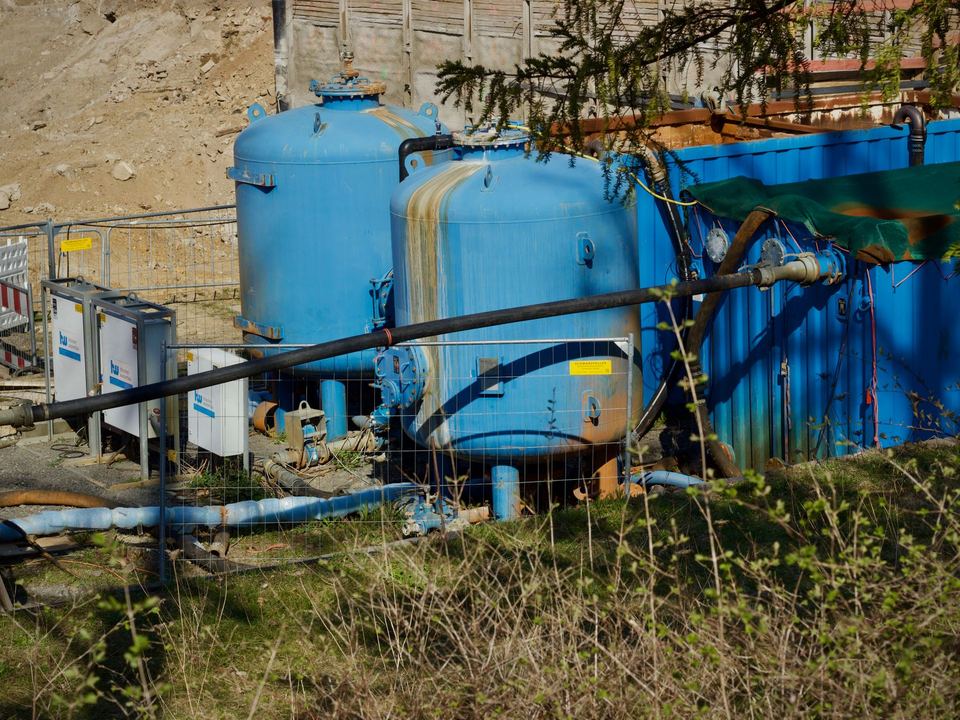
17 line items in process order, each with its tag, specification, quantity, power and an indicative unit price.
5 HP · 6 m³/h at 80 m head · SS304 body
Lifts raw water from the borehole into the raw-water tank under level control.
10,000 L · food-grade PE · level switches
Buffers borehole supply so the treatment train runs at a steady flow.
3 m³/h · FRP vessel · auto backwash valve
Removes suspended solids above 5 microns; backwashes automatically on a timer.
3 m³/h · granular activated carbon · FRP vessel
Strips chlorine, taste and odour, protecting the RO membranes downstream.
3 m³/h · twin-vessel · brine regeneration
Removes calcium and magnesium hardness so the membranes do not scale.
2,000 L/h permeate · 5 µm cartridge pre-filter · SS304 skid
High-pressure membranes remove about 99 % of dissolved solids (TDS below 50 mg/L).
40 mJ/cm² dose · 3 m³/h · SS316 chamber
Inactivates bacteria and viruses in the permeate without chemicals.
5 g/h O₃ · venturi injection · contact tower
Final disinfection that also extends shelf life of the bottled water.
10,000 L each · SS304 · sanitary fittings, CIP ball
Holds treated water ready for the filling line; cleaned in place weekly.
2,000 bottles/h · 2 cavities · 0.2–2 L
Heats PET preforms and blows them into bottles in-house, cutting packaging cost.
30 bar · 1.2 m³/min · refrigerated dryer + receiver
Supplies clean, dry high-pressure air for blow moulding and line pneumatics.
24 rinse · 24 fill · 8 cap heads · 3,000 bottles/h
Rinses each bottle with ozonated water, gravity-fills and screw-caps it in one enclosure.
120 barrels/h · brush + detergent + rinse stations
Washes returnable 20 L barrels inside and out, then fills and caps them.
3,000 bottles/h · steam generator included
Places a printed PVC/PET sleeve on each bottle and shrinks it tight with steam.
Continuous inkjet · 2 lines of text · encoder-synced
Prints batch number and best-before date for traceability.
8–10 packs/min · PE film · heat tunnel
Groups bottles into 12- or 24-packs and shrink-wraps them for dispatch.
TDS, pH, turbidity meters · incubator · membrane filtration
Tests every batch for TDS, pH and turbidity and runs daily microbiology.
Indicative ex-works prices (US$, 2026) for budgeting a sample project, not quotations. Photos are illustrative of each machine class.
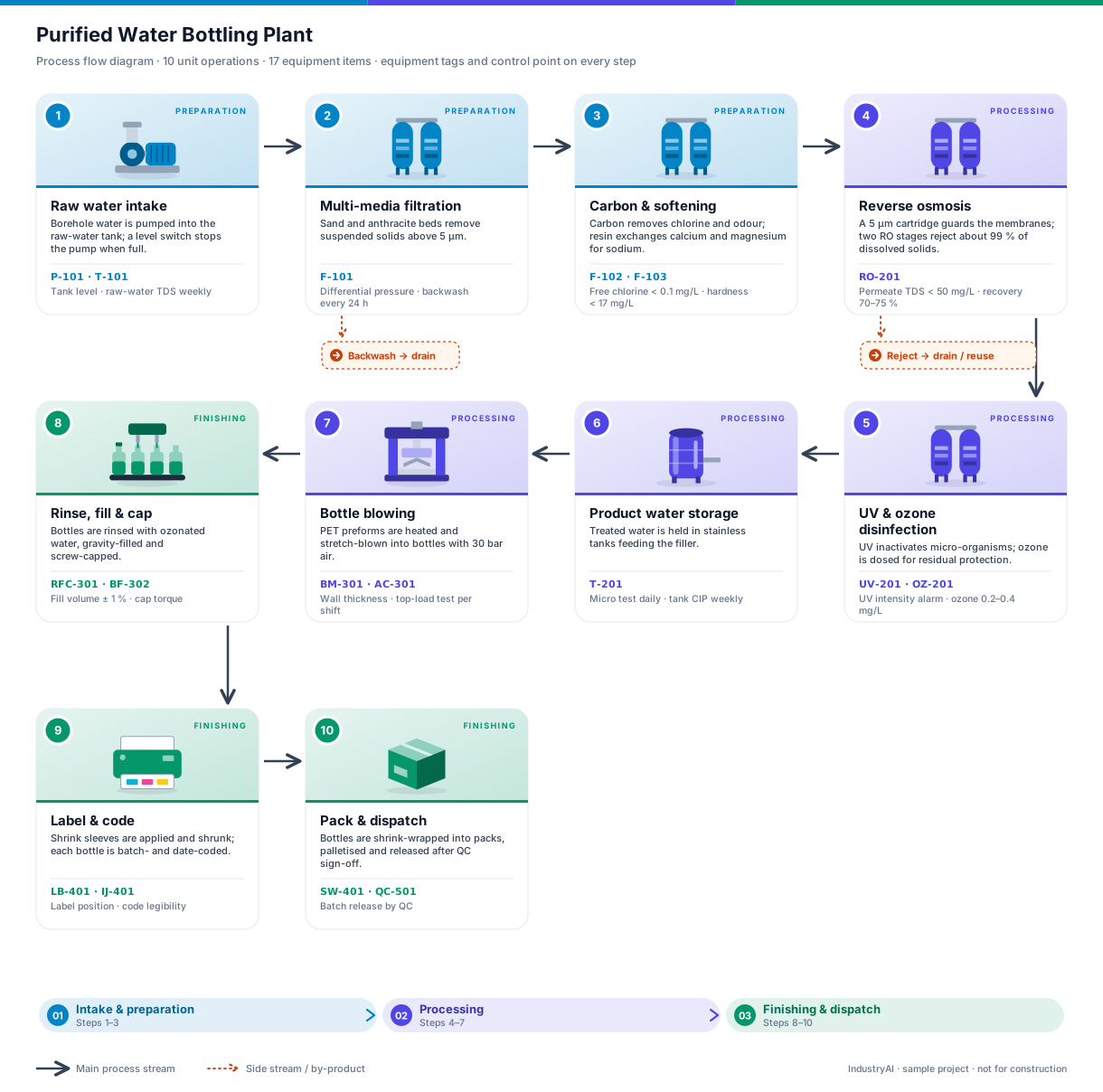
10 unit operations in order, with the equipment that performs each and its control point.
| Step | Operation | Equipment | Control point |
|---|---|---|---|
| 01 | Raw water intakeBorehole water is pumped into the raw-water tank; a level switch stops the pump when full. | P-101 Submersible Borehole PumpT-101 Raw Water Storage Tank |
Tank level · raw-water TDS weekly |
| 02 | Multi-media filtrationSand and anthracite beds remove suspended solids above 5 µm.Backwash → drain | F-101 Multi-Media Sand Filter |
Differential pressure · backwash every 24 h |
| 03 | Carbon & softeningCarbon removes chlorine and odour; resin exchanges calcium and magnesium for sodium. | F-102 Activated Carbon FilterF-103 Ion-Exchange Water Softener |
Free chlorine < 0.1 mg/L · hardness < 17 mg/L |
| 04 | Reverse osmosisA 5 µm cartridge guards the membranes; two RO stages reject about 99 % of dissolved solids.Reject → drain / reuse | RO-201 Two-Stage Reverse Osmosis System |
Permeate TDS < 50 mg/L · recovery 70–75 % |
| 05 | UV & ozone disinfectionUV inactivates micro-organisms; ozone is dosed for residual protection. | UV-201 UV SteriliserOZ-201 Ozone Generator & Mixing Tower |
UV intensity alarm · ozone 0.2–0.4 mg/L |
| 06 | Product water storageTreated water is held in stainless tanks feeding the filler. | T-201 Stainless Product Water Tank |
Micro test daily · tank CIP weekly |
| 07 | Bottle blowingPET preforms are heated and stretch-blown into bottles with 30 bar air. | BM-301 PET Stretch Blow Moulding MachineAC-301 High-Pressure Air Compressor & Dryer |
Wall thickness · top-load test per shift |
| 08 | Rinse, fill & capBottles are rinsed with ozonated water, gravity-filled and screw-capped. | RFC-301 Rinse-Fill-Cap MonoblocBF-302 20 L Barrel Wash-Fill-Cap Line |
Fill volume ± 1 % · cap torque |
| 09 | Label & codeShrink sleeves are applied and shrunk; each bottle is batch- and date-coded. | LB-401 Shrink-Sleeve Labeller & Steam TunnelIJ-401 Inkjet Date & Batch Coder |
Label position · code legibility |
| 10 | Pack & dispatchBottles are shrink-wrapped into packs, palletised and released after QC sign-off. | SW-401 Shrink-Wrap PackerQC-501 Quality-Control Lab Kit |
Batch release by QC |
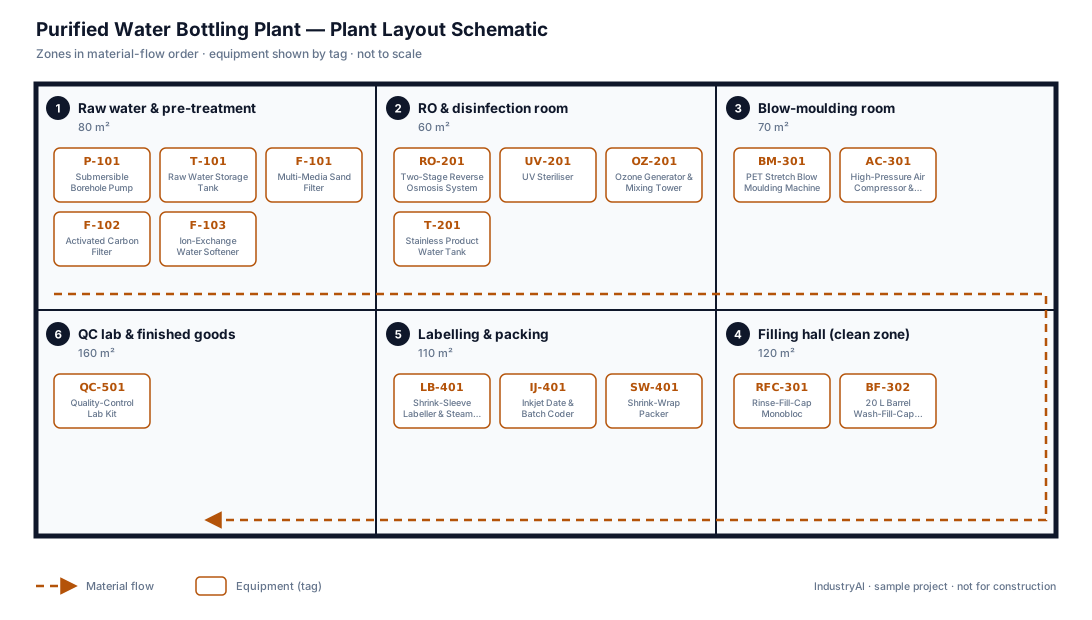
6 zones arranged for one-way material flow, with every item of equipment placed by tag.
RO, UV and ozone in series keep product water microbiologically safe.
Blowing your own PET bottles cuts packaging cost by 30–40 % against bought-in bottles.
Rinse, fill and cap happen in one enclosed machine, so no open bottles travel through the hall.
RO reject can be reused for floor washing and barrel pre-rinse.
Every bottle carries a batch and date code linked to its lab results.
The RO and filler are sized to double output with a third shift.
The core routines operators follow, from start-up to batch release.
11 sections: open any one to read it, or download the whole document.
Crystal Springs Water is a purified water bottling facility located in Athi River, Kenya, producing 20,000 liters of bottled water daily (500ml, 1L, 5L, and 20L formats). The plant uses multi-stage reverse osmosis, UV sterilization, and automated filling technology.
| Metric | Value |
|---|---|
| Daily Production Capacity | 20,000 liters |
| Annual Revenue (Year 1) | KES 36,000,000 (~$280,000) |
| Initial Investment | KES 15,000,000 (~$115,000) |
| Break-even | Month 10 |
| Employees | 18 |
| Stage | Process | Purpose | Equipment |
|---|---|---|---|
| 1 | Raw Water Intake | Borehole extraction | Submersible pump (5HP) |
| 2 | Pre-Filtration | Remove sediment >5 micron | Multi-media sand filter |
| 3 | Activated Carbon | Remove chlorine, taste, odor | Granular activated carbon vessel |
| 4 | Water Softening | Remove calcium, magnesium | Ion exchange resin vessel |
| 5 | Reverse Osmosis | Remove 99% of dissolved solids | 2-stage RO system (2,000 L/hr) |
| 6 | UV Sterilization | Kill bacteria and viruses | UV chamber (40mJ/cm2) |
| 7 | Ozonation | Final disinfection + shelf life | Ozone generator (5g/hr) |
| 8 | Storage | Clean water holding | Stainless steel tanks (10,000L x 2) |
| Certification | Authority | Timeline | Cost (KES) |
|---|---|---|---|
| KEBS Quality Mark | Kenya Bureau of Standards | 3-6 months | 150,000 |
| NEMA License | National Environment Authority | 2-3 months | 50,000 |
| County Business Permit | Machakos County | 1 month | 30,000 |
| Public Health License | Ministry of Health | 2 months | 25,000 |
| HACCP Certification | Accredited CB | 6-9 months | 200,000 |
| Parameter | KEBS Standard | Our Target | Frequency |
|---|---|---|---|
| TDS | < 500 mg/L | < 50 mg/L | Every batch |
| pH | 6.5 - 8.5 | 6.8 - 7.2 | Every batch |
| E. coli | 0 CFU/100ml | 0 CFU/100ml | Daily |
| Total Coliforms | 0 CFU/100ml | 0 CFU/100ml | Daily |
| Turbidity | < 5 NTU | < 0.5 NTU | Every batch |
| Item | Cost (KES) |
|---|---|
| RO water treatment system | 3,500,000 |
| Bottling line (blower + filler + capper) | 4,200,000 |
| Labeling & packaging machines | 1,200,000 |
| Borehole drilling & pump | 800,000 |
| Factory fit-out & plumbing | 1,500,000 |
| Generator (50kVA backup) | 1,000,000 |
| Delivery truck | 1,800,000 |
| Working capital | 1,000,000 |
| Total | 15,000,000 |
| Item | Monthly (KES) |
|---|---|
| Raw materials (PET preforms, caps, labels) | 800,000 |
| Staff salaries (18 employees) | 450,000 |
| Electricity & water | 120,000 |
| Rent | 150,000 |
| Transport & distribution | 200,000 |
| Marketing | 100,000 |
| Maintenance & consumables | 80,000 |
| Total Monthly OPEX | 1,900,000 |
| Channel | % Revenue | Key Accounts |
|---|---|---|
| Wholesale Distributors | 40% | 5 regional distributors covering Nairobi, Mombasa, Nakuru |
| Retail (Supermarkets) | 25% | Naivas, Quickmart, Carrefour |
| Institutional (20L refill) | 20% | Offices, schools, hospitals |
| Direct / Online | 15% | Company website + delivery apps |
Kenya's bottled water market reached KES 18 billion in 2025 and is growing at 11% CAGR, driven by urban water-quality concerns, rising disposable incomes and tourism rebound. East Africa's wider market is valued at KES 52 billion with Tanzania and Uganda growing fastest.
| Tier | Definition | Value (KES) |
|---|---|---|
| TAM | Total East African bottled water | 52 billion |
| SAM | Nairobi + Mombasa metro retail & institutional | 6.4 billion |
| SOM (Year 3) | Crystal Springs share at 2% of SAM | 128 million |
| Brand | Positioning | Est. Share | Weakness |
|---|---|---|---|
| Dasani | Premium, supermarket-led | 22% | High price, plastic-waste image |
| Keringet | Mineral water, mid-premium | 15% | Limited 20L institutional reach |
| Aquamist | Mass market, value | 10% | Inconsistent quality reports |
| Local refillers | 20L dispenser fill-ups | 30% (fragmented) | Trust + safety concerns |
Crystal Springs differentiation: KEBS-certified premium quality at a 15% lower retail price than Dasani, with reliable institutional 20L refill service backed by GPS-tracked delivery.
Premium-affordable: KEBS Diamond Mark certified water at a price 12-18% below Dasani / Aquafina. Brand story emphasises the borehole source, multi-stage purification, and Kenyan ownership.
| Phase | Months | Focus | Targets |
|---|---|---|---|
| 1. Launch | 1-3 | Local retail + influencer reviews in Nairobi | 15 supermarket SKUs listed, 200 retailers |
| 2. Scale | 4-9 | Distributor onboarding, institutional 20L | 5 distributors, 80 corporate accounts |
| 3. Expand | 10-18 | Mombasa & Nakuru, online D2C | 2 regional depots, 25% online share |
| Channel | CAC (KES) | LTV (KES) | Payback |
|---|---|---|---|
| Institutional (20L) | 3,500 | 72,000 | 2 months |
| Retail Listings | per-SKU listing fees | — | 3 months |
| D2C / Delivery Apps | 180 | 2,400 | 4 orders |
| Role | Headcount | Monthly Cost (KES) | Reports To |
|---|---|---|---|
| Managing Director | 1 | 180,000 | Board |
| Plant Manager | 1 | 90,000 | MD |
| QA / Lab Technician | 1 | 55,000 | Plant Manager |
| Production Operators | 6 | 22,000 each | Plant Manager |
| Warehouse & Loading | 3 | 20,000 each | Plant Manager |
| Sales & Distribution Lead | 1 | 75,000 | MD |
| Sales Representatives | 3 | 35,000 each | Sales Lead |
| Drivers | 2 | 30,000 each | Sales Lead |
| Accountant / Admin | 1 | 60,000 | MD |
| Total | 19 | ~840,000 | — |
Training: KEBS Good Manufacturing Practice (GMP) certification for production team; HACCP food-safety induction for all new staff within 30 days of joining.
| Month | Milestone | Owner | Dependency |
|---|---|---|---|
| M1 | Land lease + borehole drilling permit | MD | WRA approval |
| M2 | Borehole drilling + flow test | Plant Manager | Drilling contractor |
| M3 | Equipment procurement order (RO + bottling line) | MD | Financing closed |
| M4-5 | Factory fit-out, electrical, plumbing | Plant Manager | Contractor |
| M6 | Equipment installation + commissioning | Plant Manager | Vendor engineers |
| M7 | KEBS + NEMA + Public Health inspections | QA Lead | Test results |
| M8 | Trial production + staff training | Plant Manager | Certifications |
| M9 | Commercial launch, first 5 distributors signed | Sales Lead | Trade marketing |
| M10-12 | Reach 70% capacity, expand to Mombasa | MD | Working capital |
| Risk | Likelihood | Impact | Mitigation |
|---|---|---|---|
| Borehole yield below 25 m³/day | Medium | High | Hydrogeological survey before drilling; backup municipal connection |
| KEBS certification delay | Medium | High | Engage KEBS-accredited consultant from M4; pre-submit dossiers |
| PET resin price volatility | High | Medium | Quarterly forward contracts with 2 suppliers; passthrough clause in distributor contracts |
| Power outages (KPLC) | High | Medium | 50 kVA standby generator (in CAPEX); inverter battery for control systems |
| Distributor non-payment | Medium | Medium | 14-day credit limits, credit insurance on top 3 accounts |
| New entrant price war | Medium | Medium | Lock institutional 20L contracts at 12-month terms with volume rebates |
Total Ask: KES 15,000,000 (~$115,000) split as KES 10M asset-backed debt + KES 5M founder equity.
| Category | Amount (KES) | % of Total |
|---|---|---|
| Equipment (RO + bottling + packaging) | 8,900,000 | 59% |
| Borehole + factory civil works | 2,300,000 | 15% |
| Generator + utilities | 1,000,000 | 7% |
| Delivery truck | 1,800,000 | 12% |
| Working capital (3 months OPEX) | 1,000,000 | 7% |
| Metric | Year 1 | Year 2 | Year 3 |
|---|---|---|---|
| EBITDA Margin | 14% | 22% | 28% |
| Debt Service Coverage | 1.3x | 1.9x | 2.6x |
Exit: Investor IRR ~32% over 5 years via strategic acquisition by a regional beverage group.
Equipment specifications, process flow diagrams, recipes and the business plan, bundled as one download.
We use strictly necessary cookies to sign you in and keep the site secure. With your consent we also use functional and analytics cookies to remember your preferences and understand which features get used. We do not use advertising cookies. Read our Cookie Policy.
Declining does not limit any paid feature. Change your choice any time via "Cookie Settings" in the footer.