Platform & Bench Weighing Scales
1 t platform + 30 kg bench · 0.1 % accuracy · batch-card printer
Weigh every powder, binder and additive against the batch card before charging.
17 line items in process order, each with its tag, specification, quantity, power and an indicative unit price.
1 t platform + 30 kg bench · 0.1 % accuracy · batch-card printer
Weigh every powder, binder and additive against the batch card before charging.
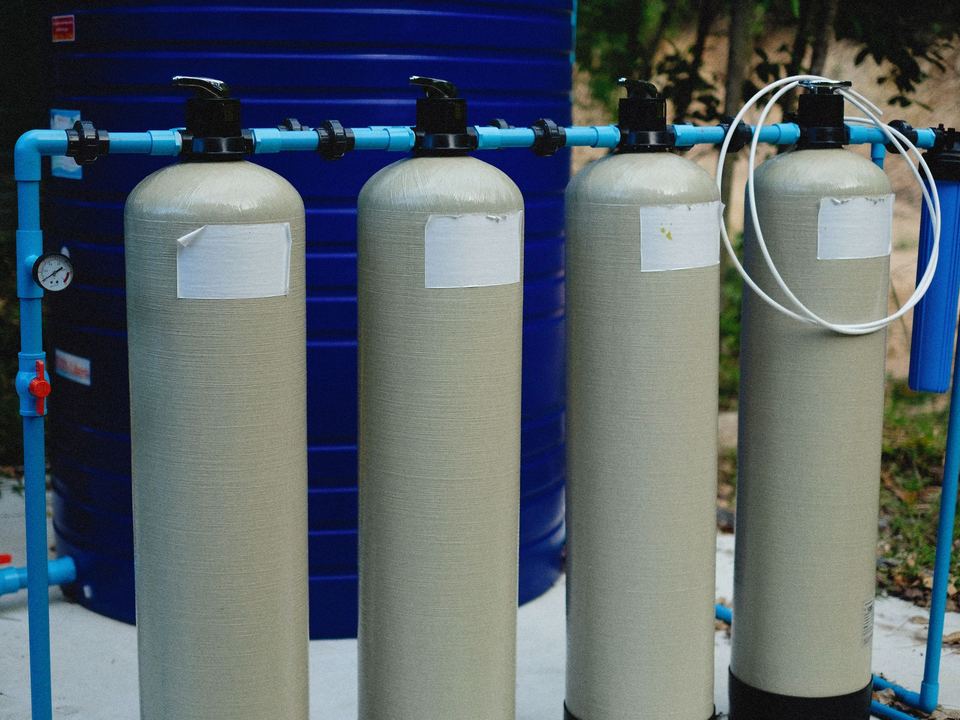
1,000 L/h · softener + RO · 10 m³ storage tank
Makes low-hardness process water so dispersants and thickeners perform consistently.
15 kW cooling · 10–15 °C glycol loop · bead-mill & HSD jackets
Removes grinding heat so the mill base stays below 40 °C and the binder is not damaged.
2.4 m³/min at 8 bar · refrigerated dryer · 500 L receiver
Supplies dry air to the fillers, lid presses, diaphragm pumps and HSD lifts.
High-pressure washer · 3 × 2,000 L settling tanks · transfer pump
Cleans tanks with minimal water and holds the wash water for reuse in the next compatible batch.
Bag-dump hood · cartridge filter · 3,000 m³/h extraction
Captures titanium dioxide and extender dust at the point where bags are emptied.
37 kW · 0–1,450 rpm VFD · hydraulic lift · 3,000 L SS vessel
Wets and disperses pigments and extenders into water and dispersant to form the mill base.
30 L chamber · zirconia beads · 300–600 L/h · cooling jacket
Grinds the mill base for silk finishes and primers to a Hegman reading of 7 or finer.
5,000 L · SS304 · low-speed anchor agitator · load cells
Blend the mill base with binder emulsion, coalescent, thickener, defoamer and biocide.
16 colourant canisters · 0.08 ml resolution · colour-formula software
Doses universal colourants accurately to match shade cards and customer colours.
KU viscometer · density cup · pH meter · Hegman gauge · drawdowns · spectro
Tests viscosity, density, pH, fineness, opacity and colour before every batch is released.
600 mm vibro-sieve · 100–200 µm bag filter housings
Removes skins, bits and undispersed agglomerates before paint reaches the filler.
1½" · up to 300 L/min · PP/SS body · air driven
Transfer thick paint between tanks, strainers and fillers without shearing it.
1–20 L · net-weight check ± 0.5 % · 300 cans/h (1–4 L) · 80 pails/h
Fills tins and pails by weight with a drip-free nozzle for thick emulsions.
1 L–20 L change parts · tin lids & plastic pail lids
Seats lids evenly so packs are leak-proof and tamper-evident.
Semi-auto wrap labeller · CIJ coder · batch & expiry codes
Labels each pack and prints the batch number that links it back to the QC record.
1.5 t electric forklift · 2 hand pallet jacks · charger
Moves raw-material pallets in and palletised finished goods out to trucks.
Indicative ex-works prices (US$, 2026) for budgeting a sample project, not quotations. Photos are illustrative of each machine class.
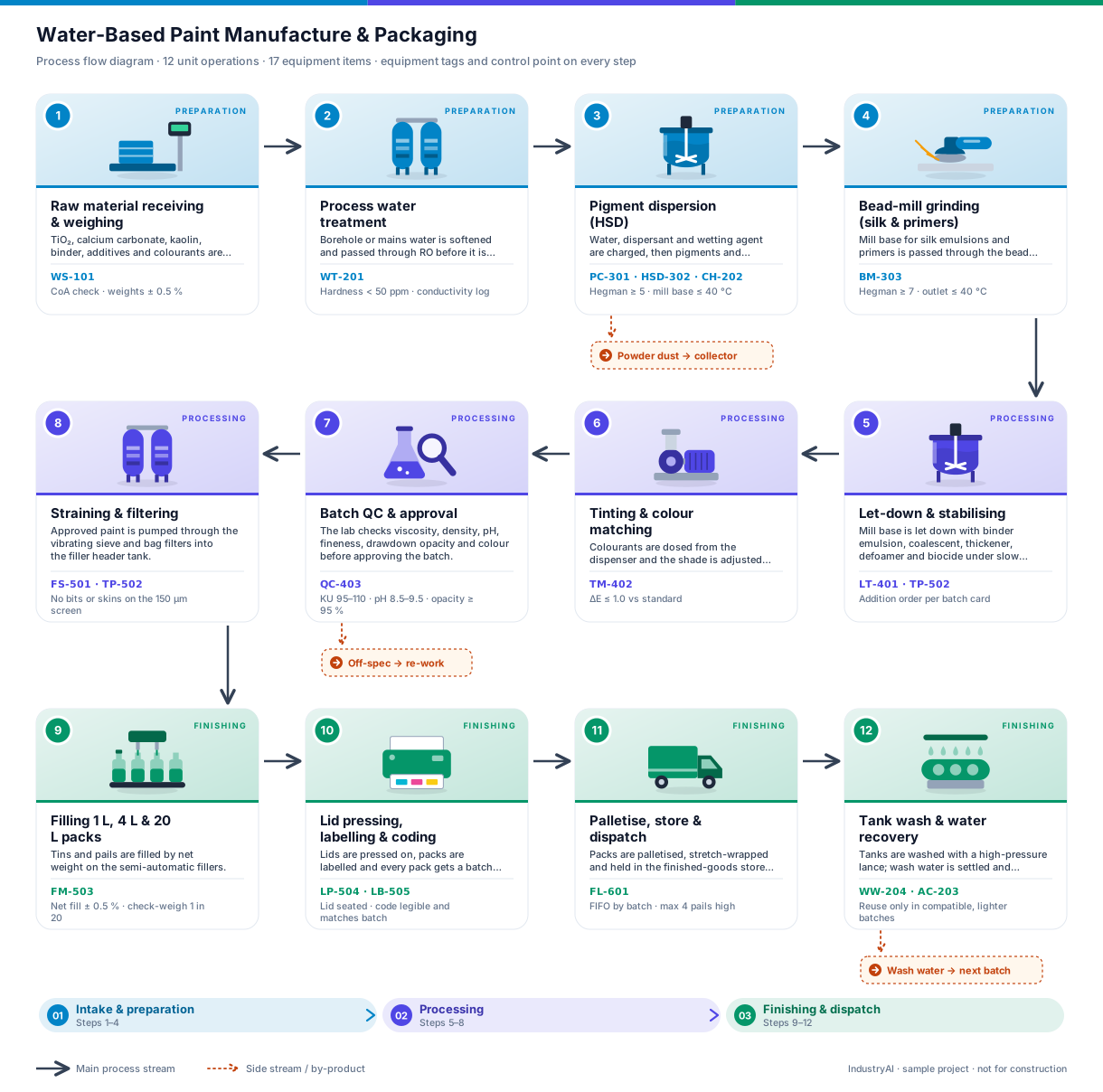
12 unit operations in order, with the equipment that performs each and its control point.
| Step | Operation | Equipment | Control point |
|---|---|---|---|
| 01 | Raw material receiving & weighingTiO₂, calcium carbonate, kaolin, binder, additives and colourants are checked in and weighed to the batch card. | WS-101 Platform & Bench Weighing Scales |
CoA check · weights ± 0.5 % |
| 02 | Process water treatmentBorehole or mains water is softened and passed through RO before it is metered into the batch. | WT-201 Softener & RO Process Water Unit |
Hardness < 50 ppm · conductivity log |
| 03 | Pigment dispersion (HSD)Water, dispersant and wetting agent are charged, then pigments and extenders are added at high speed to form the mill base.Powder dust → collector | PC-301 Powder Charging Station & Dust CollectorHSD-302 High-Speed Disperser (HSD)CH-202 Process Water Chiller |
Hegman ≥ 5 · mill base ≤ 40 °C |
| 04 | Bead-mill grinding (silk & primers)Mill base for silk emulsions and primers is passed through the bead mill for a finer grind. | BM-303 Horizontal Bead Mill |
Hegman ≥ 7 · outlet ≤ 40 °C |
| 05 | Let-down & stabilisingMill base is let down with binder emulsion, coalescent, thickener, defoamer and biocide under slow agitation. | LT-401 Let-Down Tanks with AgitatorsTP-502 Air-Operated Diaphragm Pumps |
Addition order per batch card |
| 06 | Tinting & colour matchingColourants are dosed from the dispenser and the shade is adjusted until it matches the standard. | TM-402 Automatic Tinting Dispenser |
ΔE ≤ 1.0 vs standard |
| 07 | Batch QC & approvalThe lab checks viscosity, density, pH, fineness, drawdown opacity and colour before approving the batch.Off-spec → re-work | QC-403 QC Laboratory & Spectrophotometer |
KU 95–110 · pH 8.5–9.5 · opacity ≥ 95 % |
| 08 | Straining & filteringApproved paint is pumped through the vibrating sieve and bag filters into the filler header tank. | FS-501 Vibrating Sieve & Bag Filter SetTP-502 Air-Operated Diaphragm Pumps |
No bits or skins on the 150 µm screen |
| 09 | Filling 1 L, 4 L & 20 L packsTins and pails are filled by net weight on the semi-automatic fillers. | FM-503 Semi-Auto Piston/Weigh Filler |
Net fill ± 0.5 % · check-weigh 1 in 20 |
| 10 | Lid pressing, labelling & codingLids are pressed on, packs are labelled and every pack gets a batch and expiry code. | LP-504 Pneumatic Lid Press & Pail SealerLB-505 Pail Labeller & Inkjet Batch Coder |
Lid seated · code legible and matches batch |
| 11 | Palletise, store & dispatchPacks are palletised, stretch-wrapped and held in the finished-goods store until dispatch. | FL-601 Electric Forklift & Pallet Jacks |
FIFO by batch · max 4 pails high |
| 12 | Tank wash & water recoveryTanks are washed with a high-pressure lance; wash water is settled and reused in the next primer or white batch.Wash water → next batch | WW-204 Tank Wash & Wash-Water RecoveryAC-203 Screw Air Compressor & Dryer |
Reuse only in compatible, lighter batches |
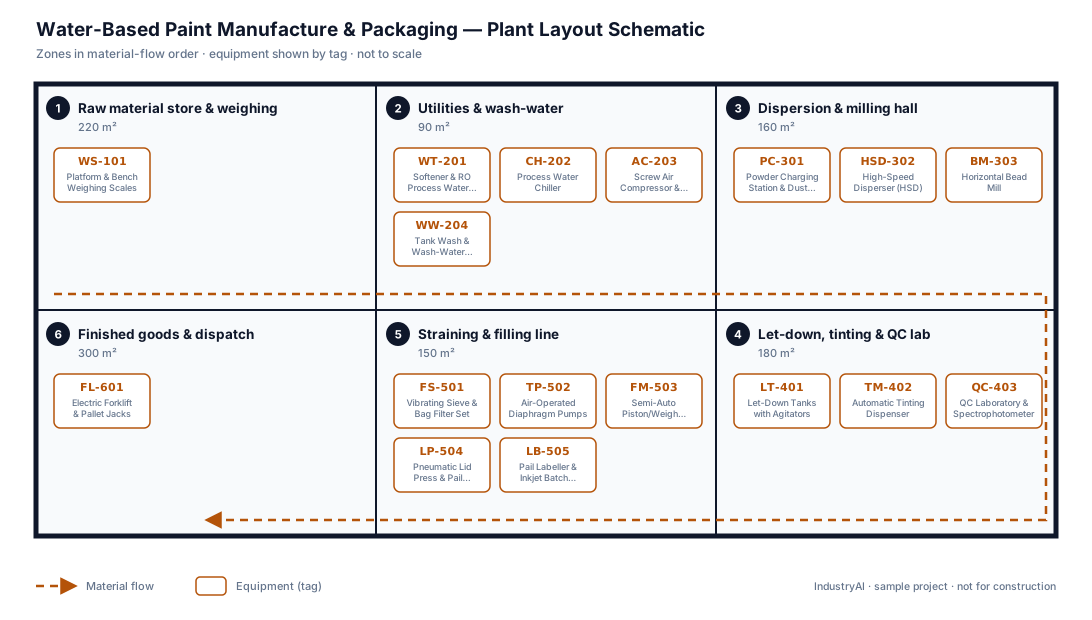
6 zones arranged for one-way material flow, with every item of equipment placed by tag.
No solvent tanks, no flammable-liquid store and paints that meet ≤ 30 g/L VOC for interior walls.
Only certified lead-free pigments and additives are used; every batch is traceable to its raw materials.
A bag-dump hood and cartridge collector keep TiO₂ and extender dust out of the air.
HSD alone for matt emulsions; bead mill added for silks and primers that need a finer grind.
An automatic tinting dispenser and spectrophotometer match colours to ΔE ≤ 1.
Tank wash water is settled and returned to the next compatible batch instead of going to drain.
The core routines operators follow, from start-up to batch release.
7 sections: open any one to read it, or download the whole document.
Rangi Bora Coatings Ltd is a water-based decorative paint manufacturer located in Ruiru, Kiambu County, on the Thika Superhighway corridor that serves Nairobi's hardware wholesalers and the fast-growing satellite towns of Kiambu and Machakos. The plant produces vinyl and acrylic matt and silk emulsions, primers and sealers, and textured exterior coatings, packed in 1 L and 4 L tins and 20 L pails. It runs a single shift on two high-speed dispersers, a bead mill for fine finishes and two 5,000-litre let-down tanks, and targets the value-to-mid price segment where contractors, landlords and Affordable Housing Programme builders buy on price per square metre.
| Metric | Value |
|---|---|
| Product Lines | 4 (matt emulsion, silk emulsion, primers/sealers, textured coatings) |
| Daily Production | 8,000–10,000 litres (single shift) |
| Pack Sizes | 1 L, 4 L and 20 L |
| Initial Investment | KES 45,000,000 (~$346,000) |
| Year 1 Revenue | KES 230,000,000 (~$1.77M) |
| Operating Break-even | Month 9 |
| Payback Period | ~2 years |
| Employees | 40 (Year 1), 52 (Year 3) |
| Product | Use | Pack Sizes | Ex-factory Price (KES/L) |
|---|---|---|---|
| Vinyl matt emulsion | Interior walls and ceilings, contractor repaints | 4 L, 20 L | 210–230 |
| Acrylic silk emulsion | Washable interior walls, kitchens, corridors | 1 L, 4 L, 20 L | 320–360 |
| Primer / sealer | New plaster and gypsum, alkali-resistant base coat | 4 L, 20 L | 160–180 |
| Textured exterior coating | Weather-resistant exterior walls | 20 L | 240–280 |
| Ingredient | % by Weight | Quantity | Cost/kg (KES) | Total (KES) |
|---|---|---|---|---|
| Process water (softened/RO) | 31.2% | 452.4 kg | 0.5 | 226 |
| HEC thickener | 0.4% | 5.8 kg | 1,100 | 6,380 |
| Dispersant (sodium polyacrylate) | 0.5% | 7.3 kg | 450 | 3,263 |
| Wetting agent | 0.2% | 2.9 kg | 500 | 1,450 |
| Defoamer | 0.3% | 4.4 kg | 650 | 2,828 |
| pH adjuster (AMP / ammonia) | 0.1% | 1.5 kg | 700 | 1,015 |
| Titanium dioxide (rutile) | 6.5% | 94.3 kg | 480 | 45,240 |
| Calcined kaolin | 5.0% | 72.5 kg | 110 | 7,975 |
| Calcium carbonate (fine GCC) | 38.0% | 551.0 kg | 26 | 14,326 |
| Talc | 3.0% | 43.5 kg | 70 | 3,045 |
| Vinyl-acrylic binder emulsion (50% solids) | 14.0% | 203.0 kg | 220 | 44,660 |
| Coalescent | 0.6% | 8.7 kg | 650 | 5,655 |
| In-can biocide | 0.2% | 2.9 kg | 900 | 2,610 |
| Total per 1,000 L | 100% | 1,450 kg | 138,673 | |
| Raw material cost per litre | ≈ 139 |
Silk emulsions use more binder (about 25%) and TiO₂ (about 18%) with less calcium carbonate, which roughly doubles the raw material cost per litre; primers cut TiO₂ to 2–3% and rely on extenders. Tinted colours add KES 5–40 per litre in colourant depending on depth of shade.
| Stage | Process | Purpose | Equipment |
|---|---|---|---|
| 1 | Receiving & Weighing | Check certificates, weigh to batch card | 1 t platform + 30 kg bench scales |
| 2 | Water Treatment | Low-hardness process water | Softener + RO (1,000 L/h) |
| 3 | Dispersion | Wet and disperse pigments and extenders into the mill base | 2 × 37 kW HSD, 3,000 L vessels, dust-extracted charging hood |
| 4 | Bead Milling (optional) | Finer grind for silks and primers | 30 L horizontal bead mill, chilled jacket |
| 5 | Let-down | Add binder, coalescent, thickener, defoamer, biocide | 2 × 5,000 L agitated tanks on load cells |
| 6 | Tinting | Match shade to standard | 16-canister tinting dispenser + spectrophotometer |
| 7 | QC Approval | Viscosity, density, pH, fineness, opacity, colour | QC laboratory |
| 8 | Straining | Remove bits and skins | Vibrating sieve + 150 µm bag filters |
| 9 | Filling | Fill 1 L, 4 L and 20 L packs by weight | 2 semi-auto piston/weigh fillers |
| 10 | Sealing & Coding | Leak-proof lids, labels, batch codes | Pneumatic lid presses, labeller, inkjet coder |
| 11 | Store & Dispatch | Palletise and ship FIFO by batch | Electric forklift, 300 m² finished-goods store |
| Requirement | Authority | Timeline | Cost (KES) |
|---|---|---|---|
| KEBS Standardization Mark (KS emulsion paint specifications) | Kenya Bureau of Standards | 3–6 months | 250,000 |
| Lead-free compliance (90 ppm total lead limit) | KEBS / Ministry of Health | Every raw material lot | Included in QC |
| EIA Licence + waste handling plan | NEMA | 3–4 months | 350,000 |
| Workplace Registration & pressure-vessel inspection | DOSH | 1–2 months | 60,000 |
| Fire Safety Certificate | County Fire Department | 1 month | 40,000 |
| Single Business Permit | Kiambu County | Annual | 60,000 |
| EAC Quality Mark (export to Uganda, Tanzania, Rwanda) | EAC partner bureaus | Year 2 | 150,000 |
| Parameter | Method | Vinyl Matt Spec | Frequency |
|---|---|---|---|
| Viscosity | Stormer KU (ASTM D562) | 95–110 KU | Every batch |
| Density | Density cup (ISO 2811) | 1.42–1.48 g/ml | Every batch |
| pH | pH meter | 8.5–9.5 | Every batch |
| Fineness of grind | Hegman gauge (ISO 1524) | ≥ 5 matt · ≥ 7 silk | Every batch |
| Opacity (contrast ratio) | Drawdown (ISO 6504-3) | ≥ 95% | Every batch |
| Colour | Spectrophotometer vs master | ΔE ≤ 1.0 | Every batch |
| Wet scrub resistance | ISO 11998 | Class 3 or better | Monthly per product |
| Total lead | ISO 6503 (external lab) | ≤ 90 ppm | New supplier + quarterly |
| In-can stability | Oven storage, 14 days at 50 °C | No settling, gassing or odour | New formulation |
| Item | KES | ~US$ |
|---|---|---|
| Process equipment (ex-works, 17 items) | 24,700,000 | 190,000 |
| Freight, duty, installation & electrical | 5,500,000 | 42,000 |
| Factory fit-out (leased 1,100 m² godown, epoxy floors, bunding, ducting) | 5,000,000 | 38,000 |
| Licences, KEBS/NEMA, trial batches & pre-operating | 1,800,000 | 14,000 |
| Initial working capital (raw material & packaging stock) | 8,000,000 | 62,000 |
| Total | 45,000,000 | 346,000 |
A KES 20 million invoice-discounting facility covers credit extended to hardware wholesalers and contractors.
| Metric | Year 1 | Year 2 | Year 3 |
|---|---|---|---|
| Volume sold (litres) | 1,000,000 | 1,600,000 | 2,200,000 |
| Average ex-factory price (KES/L) | 230 | 232 | 235 |
| Revenue | 230,000,000 | 371,200,000 | 517,000,000 |
| Raw materials & packaging | 155,000,000 | 246,400,000 | 336,600,000 |
| Labour | 24,000,000 | 28,000,000 | 33,000,000 |
| Distribution & marketing | 23,000,000 | 35,000,000 | 46,000,000 |
| Rent, power & overheads | 15,000,000 | 17,000,000 | 19,000,000 |
| Depreciation | 3,500,000 | 3,500,000 | 3,500,000 |
| Profit before tax | 9,500,000 | 41,300,000 | 78,900,000 |
| Net profit (after 30% tax) | 6,650,000 | 28,910,000 | 55,230,000 |
| Net margin | 2.9% | 7.8% | 10.7% |
| Approx. US$ net profit | $51,000 | $222,000 | $425,000 |
| Cost Element | KES/L | ~US$/L |
|---|---|---|
| Raw materials (formulation above) | 139 | 1.07 |
| Packaging (pail, lid, label ≈ KES 260 per 20 L) | 13 | 0.10 |
| Direct labour | 8 | 0.06 |
| Power, water & consumables | 4 | 0.03 |
| Overheads, distribution & marketing | 34 | 0.26 |
| Total cost | 198 | 1.52 |
| Ex-factory price (KES 4,600 per 20 L) | 230 | 1.77 |
| Margin per litre | 32 | 0.25 |
Monthly fixed costs (labour, rent, overheads and base marketing) are about KES 5.2 million. At a blended contribution of about KES 60 per litre after materials, packaging and variable distribution, break-even is roughly 87,000 litres a month, or about 3,600 litres a day. Sales pass that level in Month 9 as distributor listings build, and the cumulative cash flow repays the KES 45 million investment early in Year 3, a payback of about two years.
| Segment | Players | Price Position | Rangi Bora Strategy |
|---|---|---|---|
| Premium brands | Established national and multinational paint makers | High | Do not compete head-on |
| Mid-market | Regional and second-tier Kenyan brands | Medium | Match quality, beat on service and delivery |
| Value / informal | Small unbranded makers | Low | Beat on consistency, opacity and KEBS mark |
| Channel | Share of Volume (Year 3) | Terms |
|---|---|---|
| Hardware wholesalers & retailers (Nairobi, Kiambu, Mt Kenya) | 45% | Cash or 30-day credit |
| Building contractors & developers | 30% | 30–60 day credit, project pricing |
| Institutions (schools, hospitals, county governments) | 15% | Tender, 60–90 days |
| Export (Uganda, Tanzania) | 10% | Letter of credit or prepayment |
| Phase | Months | Key Activities |
|---|---|---|
| Setup & Approvals | 1–2 | Company registration, lease Ruiru godown, NEMA EIA, KEBS pre-application |
| Equipment Procurement | 2–4 | Order HSDs, bead mill, tanks and fillers (10–14 weeks ex-works); factory fit-out and electrical supply |
| Installation | 4–5 | Install and commission equipment, dust extraction and wash-water tanks; staff training |
| Trial Production | 5–6 | Formulation trials, stability testing, KEBS sampling and S-mark |
| Market Launch | 6–7 | Distributor listings, contractor trials, shade cards and point-of-sale material |
| Scale-up | 7–18 | Move toward 8,000 L/day, add retailer tinting points, apply for the EAC mark |
| Risk | Impact | Mitigation |
|---|---|---|
| Titanium dioxide and binder price swings | High | Quarterly price reviews, 60-day buffer stock, TiO₂-optimised formulations using calcined kaolin |
| Shilling depreciation on imported inputs | Medium | Local calcium carbonate and kaolin (about 60% of batch weight); forward-buying for large orders |
| Trade credit and bad debts | High | Credit limits per customer, invoice discounting, cash terms for new accounts |
| In-can spoilage or complaints | Medium | Biocide dosing, retained samples, 14-day stability test on every new formula |
| Price competition from informal makers | Medium | KEBS mark, opacity claims backed by tests, contractor coverage guarantees |
| Power outages | Low | Batch process tolerates stoppages; 100 kVA generator covers QC, filling and lighting |
Equipment specifications, process flow diagrams, recipes and the business plan, bundled as one download.
We use strictly necessary cookies to sign you in and keep the site secure. With your consent we also use functional and analytics cookies to remember your preferences and understand which features get used. We do not use advertising cookies. Read our Cookie Policy.
Declining does not limit any paid feature. Change your choice any time via "Cookie Settings" in the footer.