Photographer's workspace with dual monitors, laptop, and editing software.
DS-101 Design & RIP Workstations Colour-calibrated 27-inch display · vector suite · RIP software for film, DTG & DTF
Illustrative photo
Equipment list

Everything the plant needs

18 line items in process order, each with its tag, specification, quantity, power and an indicative unit price.

Equipment list (CSV)
DS-101
Pre-press

Design & RIP Workstations

Colour-calibrated 27-inch display · vector suite · RIP software for film, DTG & DTF

Turns customer logos into print-ready vectors, colour separations and RIP'd print files.

Qty
2
Power
0.5 kW
Unit price
$2,500–4,500
FP-102
Pre-press

Film Positive Printer

A3+ inkjet · dense black ink set · waterproof film · halftone RIP

Prints the opaque film positives used to expose each colour screen.

Qty
1
Power
0.1 kW
Unit price
$1,200–2,500
VC-103
Pre-press

Vinyl Cutter / Plotter

60 cm cutting width · optical contour registration · 500 g force

Cuts heat-transfer vinyl for names, numbers and short-run sports kits.

Qty
1
Power
0.1 kW
Unit price
$400–1,800
EX-201
Screen making

LED Screen Exposure Unit

UV-LED array · vacuum blanket · up to 58 × 76 cm frames · digital timer

Hardens photo-emulsion through the film positive to form the stencil on each screen.

Qty
1
Power
0.6 kW
Unit price
$1,500–3,500
WB-202
Screen making

Washout Booth & Screen Dryer

Back-lit PE booth · 100 bar pressure washer · 20-screen drying cabinet

Washes out unexposed emulsion, reclaims used screens and dries them dust-free.

Qty
1
Power
2.2 kW
Unit price
$1,200–2,500
CP-301
Screen printing

6-Colour 6-Station Carousel Press

6 colours · 6 stations · micro-registration · manual (semi-auto upgrade)

Prints plastisol and water-based designs of up to six spot colours on garments and totes.

Qty
1
Power
—
Unit price
$3,000–8,000
FD-302
Screen printing

Flash Cure Unit

45 × 45 cm quartz IR panel · swing-away stand · timer

Gels the white underbase between colours so the next layer prints cleanly.

Qty
2
Power
3.0 kW
Unit price
$400–1,000
CD-303
Curing

Infrared Conveyor Dryer

1.2 m tunnel · 60 cm Teflon belt · variable speed · up to 200 °C

Fully cures screen-printed ink so prints survive 50+ washes without cracking.

Qty
1
Power
12.0 kW
Unit price
$4,000–9,000
PT-401
Digital print

DTG Pretreatment Machine

Automatic spray · programmable g/shirt · front & back in one pass

Applies an even pretreatment coat so DTG white ink bonds to dark cotton.

Qty
1
Power
0.3 kW
Unit price
$3,000–6,000
DG-402
Digital print

Direct-to-Garment (DTG) Printer

CMYK + white · 40 × 50 cm platen · ≈ 30 s light / 90 s dark shirt

Prints full-colour photographic designs straight onto cotton garments with no setup cost.

Qty
1
Power
0.6 kW
Unit price
$18,000–35,000
DF-403
Digital print

DTF Printer & Powder Shaker

60 cm roll · twin heads CMYK + white · inline powder shaker & curing oven

Prints and powders gang sheets of transfers for any fabric, bags and caps.

Qty
1
Power
4.5 kW
Unit price
$8,000–18,000
HP-501
Heat transfer

Pneumatic Flat Heat Press

40 × 60 cm twin-station · pneumatic · digital time/temp/pressure

Applies DTF, vinyl and sublimation transfers and cures DTG pretreatment.

Qty
2
Power
2.5 kW
Unit price
$800–2,500
CH-502
Heat transfer

Cap Heat Press

Curved 8 × 15 cm platen · interchangeable cap forms · digital control

Presses DTF and vinyl logos onto curved cap fronts.

Qty
1
Power
0.6 kW
Unit price
$250–700
SB-503
Heat transfer

Sublimation Printer

A3+ to 24-inch · sublimation ink set · ICC profiles per substrate

Prints mirrored dye-sublimation transfers for mugs, polyester kits and giftware.

Qty
1
Power
0.2 kW
Unit price
$1,500–4,500
MP-504
Heat transfer

Mug Press (+ optional Tumbler Oven)

11–15 oz wraps · digital timer · 25-tumbler convection oven optional

Transfers sublimation prints onto polymer-coated mugs and tumblers.

Qty
3
Power
0.4 kW
Unit price
$250–900
EM-505
Embroidery

Single-Head 15-Needle Embroidery

15 needles · 1,000 spm · 360 × 500 mm field · cap frame kit

Stitches logos on caps, polos and corporate shirts.

Qty
1
Power
0.5 kW
Unit price
$8,000–16,000
QC-601
QC

QC & Trimming Tables

D65 daylight lamp · lint roller & thread trimmers · size/count sheets

Every piece is checked against the approved proof, trimmed and de-linted.

Qty
2
Power
—
Unit price
$150–400
PK-602
Packing

Folding & Packing Stations

Folding boards · poly-bag sealer · mug boxes · carton scale & label printer

Items are folded, bagged by size, boxed and labelled for pickup or courier.

Qty
3
Power
0.2 kW
Unit price
$250–600
Line items18
Machines26
Connected load≈ 36 kW
Equipment budgetUS$59,250 – 128,800

Indicative ex-works prices (US$, 2026) for budgeting a sample project, not quotations. Photos are illustrative of each machine class.

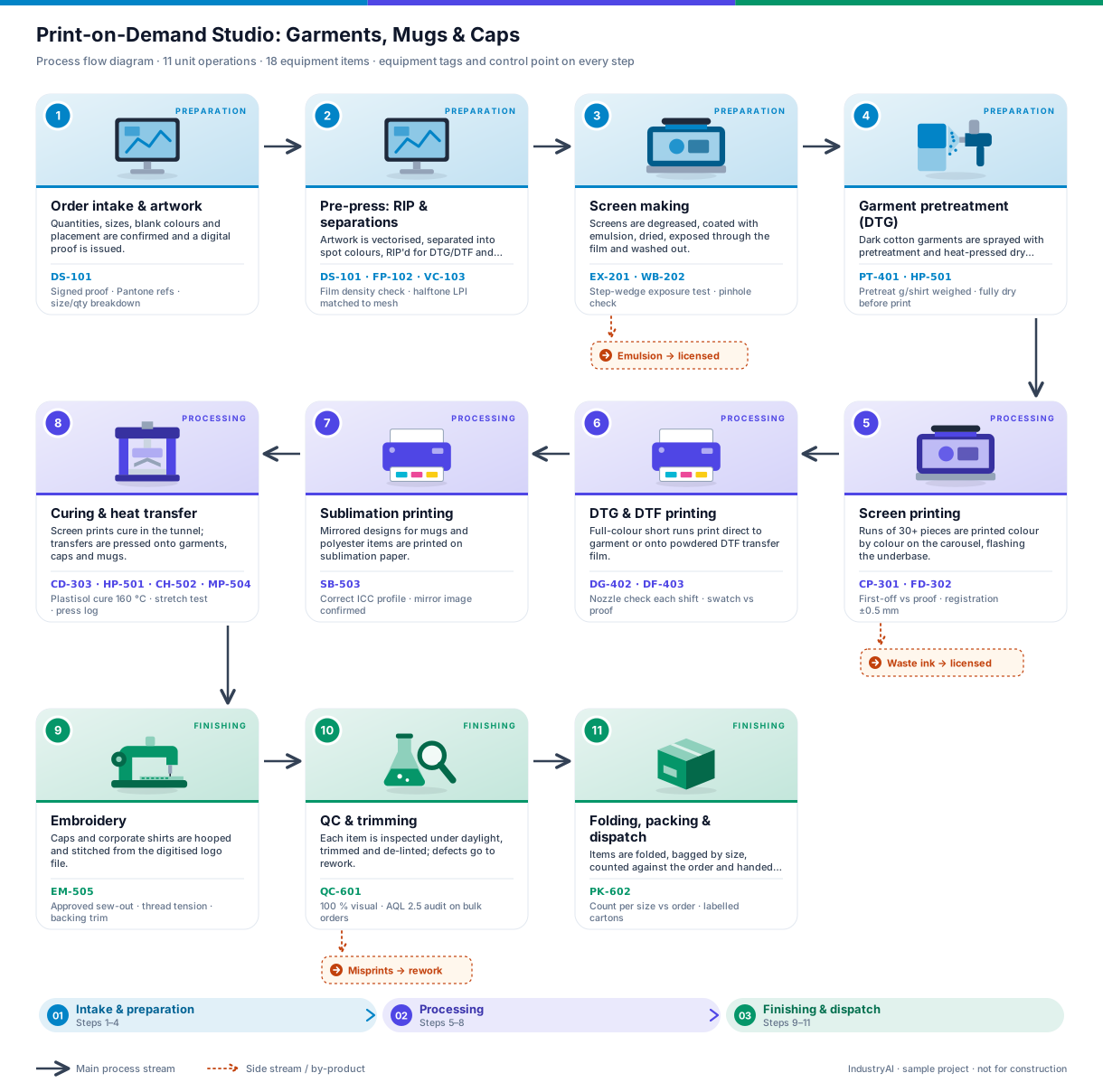
Process flow diagram

From raw material to dispatch

11 unit operations in order, with the equipment that performs each and its control point.

Download PFD (SVG)
Process flow diagram of the Print-on-Demand Studio: Garments, Mugs & Caps: 1. Order intake & artwork, 2. Pre-press: RIP & separations, 3. Screen making, 4. Garment pretreatment (DTG), 5. Screen printing, 6. DTG & DTF printing, 7. Sublimation printing, 8. Curing & heat transfer, 9. Embroidery, 10. QC & trimming, 11. Folding, packing & dispatch.
StepOperationEquipmentControl point
01 Order intake & artworkQuantities, sizes, blank colours and placement are confirmed and a digital proof is issued. DS-101 Design & RIP Workstations Signed proof · Pantone refs · size/qty breakdown
02 Pre-press: RIP & separationsArtwork is vectorised, separated into spot colours, RIP'd for DTG/DTF and cut for vinyl. DS-101 Design & RIP WorkstationsFP-102 Film Positive PrinterVC-103 Vinyl Cutter / Plotter Film density check · halftone LPI matched to mesh
03 Screen makingScreens are degreased, coated with emulsion, dried, exposed through the film and washed out.Emulsion → licensed EX-201 LED Screen Exposure UnitWB-202 Washout Booth & Screen Dryer Step-wedge exposure test · pinhole check
04 Garment pretreatment (DTG)Dark cotton garments are sprayed with pretreatment and heat-pressed dry before DTG printing. PT-401 DTG Pretreatment MachineHP-501 Pneumatic Flat Heat Press Pretreat g/shirt weighed · fully dry before print
05 Screen printingRuns of 30+ pieces are printed colour by colour on the carousel, flashing the underbase.Waste ink → licensed CP-301 6-Colour 6-Station Carousel PressFD-302 Flash Cure Unit First-off vs proof · registration ±0.5 mm
06 DTG & DTF printingFull-colour short runs print direct to garment or onto powdered DTF transfer film. DG-402 Direct-to-Garment (DTG) PrinterDF-403 DTF Printer & Powder Shaker Nozzle check each shift · swatch vs proof
07 Sublimation printingMirrored designs for mugs and polyester items are printed on sublimation paper. SB-503 Sublimation Printer Correct ICC profile · mirror image confirmed
08 Curing & heat transferScreen prints cure in the tunnel; transfers are pressed onto garments, caps and mugs. CD-303 Infrared Conveyor DryerHP-501 Pneumatic Flat Heat PressCH-502 Cap Heat PressMP-504 Mug Press (+ optional Tumbler Oven) Plastisol cure 160 °C · stretch test · press log
09 EmbroideryCaps and corporate shirts are hooped and stitched from the digitised logo file. EM-505 Single-Head 15-Needle Embroidery Approved sew-out · thread tension · backing trim
10 QC & trimmingEach item is inspected under daylight, trimmed and de-linted; defects go to rework.Misprints → rework QC-601 QC & Trimming Tables 100 % visual · AQL 2.5 audit on bulk orders
11 Folding, packing & dispatchItems are folded, bagged by size, counted against the order and handed to courier. PK-602 Folding & Packing Stations Count per size vs order · labelled cartons
Schematic

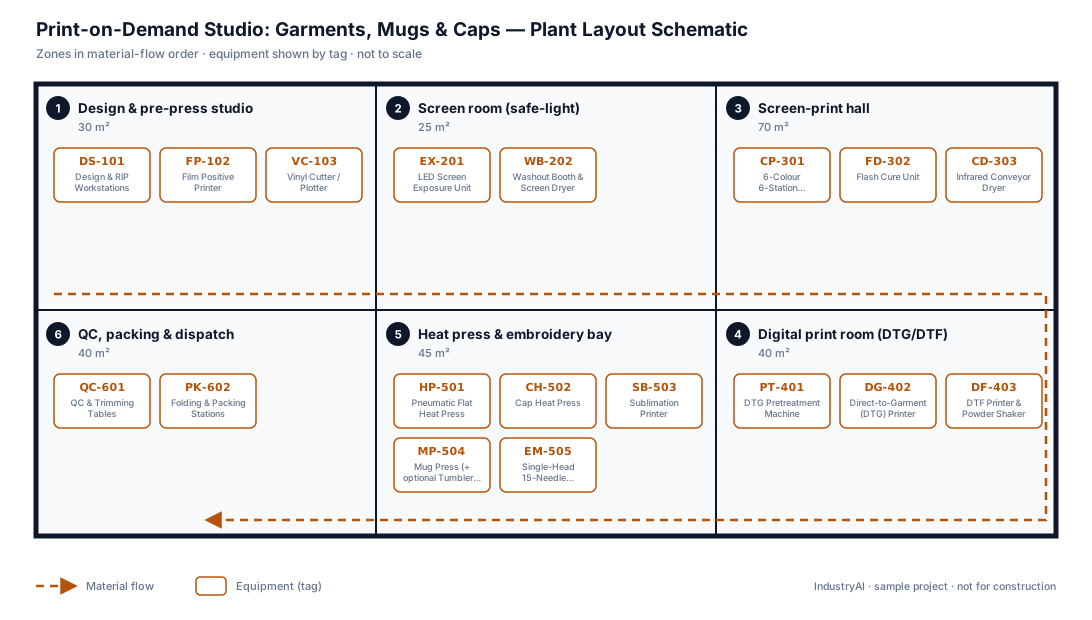
Plant layout

6 zones arranged for one-way material flow, with every item of equipment placed by tag.

Download layout (SVG)
Plant layout schematic of the Print-on-Demand Studio: Garments, Mugs & Caps: Design & pre-press studio, Screen room (safe-light), Screen-print hall, Digital print room (DTG/DTF), Heat press & embroidery bay, QC, packing & dispatch.
Features & capacities

Why this line works

Five methods, one roof

Each job goes to the cheapest method for its run length, from a single DTG shirt to 2,000 screen prints.

No-minimum digital print

DTG and DTF take one-off online orders with no screen setup, so small orders still make money.

Controlled colour

Calibrated displays, ICC profiles and Pantone-referenced proofs keep brand colours consistent.

Proper curing

A tunnel dryer and logged heat presses give prints that pass 40–60 °C wash tests.

Managed waste streams

Waste ink and emulsion go to a NEMA-licensed handler; misprints are reworked or donated.

One-way flow

Blanks go in at one end and packed orders leave at the other, with no back-tracking.

Capacities

Screen printing
450–550 garments/day · 1–6 colours
DTG printing
120–150 garments/day (light & dark)
DTF transfers
≈ 25 m film/day ≈ 200–250 transfers
Sublimation mugs
150–200 mugs/day (3 presses)
Caps
50–60 embroidered + ≈ 60 heat-pressed/day
Screen making
12–15 screens/day coated & exposed
Studio total
800–1,200 mixed items/day, 1 shift

Utilities required

Electricity
≈ 45 kW connected · 415 V 3-phase · dryer on its own circuit
Compressed air
6–8 bar, ≈ 300 L/min for pneumatic heat presses
Water
≈ 400 L/day for washout, via a settling tank before drain
Ventilation
Extraction over dryer, DTF oven and washout; 45–60 % RH for DTG
Lighting
Yellow safe-light in screen room · 5,000 K daylight at QC
Process instructions

Standard operating procedures

The core routines operators follow, from start-up to batch release.

01Pre-press & screens

  1. Never start production without a customer-signed proof showing placement, size and Pantone colours.
  2. Match mesh count to the job: 110 for whites and bold fills, 160–200 for fine detail and halftones.
  3. Run a step-wedge test whenever emulsion batch or bulb hours change, and record the exposure time.
  4. Degrease and dry screens fully before coating; store coated screens in the dark cabinet.

02Printing

  1. Print a first-off on a test garment and get supervisor sign-off before the run starts.
  2. Check registration and ink deposit every 25 pieces; top up ink before the screen starves.
  3. Run the DTG and DTF nozzle checks at the start of each shift and keep the white ink circulating.
  4. Keep the digital print room at 45–60 % relative humidity to prevent printhead clogging.

03Curing & heat transfer

  1. Verify dryer temperature with a heat strip or probe each morning; plastisol must reach 160 °C through the film.
  2. Stretch-test the first cured piece of every run: cracking means undercured ink.
  3. Log time, temperature and pressure for each press job and check against the transfer supplier's sheet.
  4. Pre-warm mug presses and cool mugs on a rack before handling to avoid ghosting.

04QC, packing & waste

  1. Inspect every item under daylight against the approved proof; tag defects with the cause.
  2. Rework what can be fixed, and record unrepairable misprints for donation or rag sale, never resale.
  3. Count and bag by size, then check totals against the order sheet before sealing cartons.
  4. Store waste ink, emulsion and solvent rags in labelled closed drums for the NEMA-licensed collector.
Process documents

The full project document

7 sections: open any one to read it, or download the whole document.

01Executive Summary

ChapaWorks Merchandise Ltd is a print-on-demand and branded-merchandise studio in Nairobi's Industrial Area. It prints T-shirts, hoodies, mugs, caps and tote bags for corporates, schools, event organisers and online shoppers. Five decoration methods in one 300 m² studio (screen printing, direct-to-garment, direct-to-film, sublimation and embroidery) let ChapaWorks take anything from a single personalised mug to a 2,000-shirt marathon order. The studio makes 800–1,200 mixed items per day on one shift with 24 staff.

MetricValue
Studio Size≈ 300 m² (incl. blanks store & office)
Daily Capacity800–1,200 mixed items (1 shift)
Initial InvestmentKES 19.5M (~$150,000)
Year 1 RevenueKES 72M (~$554,000)
Year 3 RevenueKES 156M (~$1.2M)
Employees24 (Year 1), 34 (Year 3)
Payback Period≈ 22 months
02Products & Printing Methods

Each method is cheapest at a different run length, so every job goes to the method with the lowest cost for its quantity, fabric and design. Screen printing handles bulk corporate and event orders, while DTG and DTF make one-off and online orders profitable with no setup charge.

MethodBest ForMin OrderCost per Print (KES)Durability
Screen printingBulk T-shirts, totes, event and campaign runs in 1–6 spot colours30–50 pcs40–120 + KES 1,500 setup per colour50+ washes
DTGPhotographic, full-colour designs on cotton; online one-offs1 pc250–600 (dark garments incl. pretreat)30–50 washes
DTFAny fabric incl. polyester, nylon bags and caps; small to medium runs1 pc (gang sheets)120–350 per transfer40–50 washes
SublimationMugs, tumblers, polyester sportswear, keyrings1 pc30–80Permanent (dye inside coating)
EmbroideryCaps, polos and corporate shirts; premium logos12 pcs150–400 per 5,000–8,000-stitch logoLife of the garment
Heat-transfer vinylNames and numbers on sports kits1 pc80–20030–50 washes

Product Mix (Year 1 Target)

Product% of UnitsTypical Price (KES, incl. blank)
T-shirts (screen / DTG / DTF)55%550–900
Hoodies & sweatshirts8%1,600–2,400
Mugs & tumblers17%400–1,200
Caps (embroidered / pressed)10%500–850
Tote bags & other items10%250–600
03Production Process

Work moves one way through six zones: design and pre-press, screen room, screen-print hall, digital print room, heat-press and embroidery bay, then QC and packing. A job ticket carrying the signed proof goes with every order, so each station checks against the same approved artwork.

StageEquipmentThroughputControl Point
Order intake & artworkDesign workstations40–60 proofs/daySigned proof with Pantone refs and size breakdown
Pre-pressRIP software, film printer, vinyl cutterAll jobsFilm density; halftone matched to mesh
Screen makingExposure unit, washout booth12–15 screens/dayStep-wedge exposure test; pinhole check
Screen printing6/6 carousel press, 2 flash units450–550 garments/dayFirst-off approval; registration ±0.5 mm
DTG / DTF printingPretreater, DTG printer, DTF printer120–150 DTG + 200–250 DTFDaily nozzle check; colour swatch vs proof
Sublimation & mugsSublimation printer, 3 mug presses150–200 mugs/dayICC profile; press time/temperature log
Curing & heat transferConveyor dryer, heat presses, cap pressMatches print output160 °C plastisol cure; stretch test
Embroidery15-needle single-head machine50–60 caps/dayApproved sew-out; thread tension
QC, packing & dispatchQC tables, packing stationsAll items100% visual; AQL 2.5 on bulk orders

Side Streams

  • Waste ink, emulsion and solvent rags: kept in labelled closed drums and collected monthly by a NEMA-licensed hazardous-waste handler
  • Washout water: passed through a settling tank and filter before discharge under the county effluent permit
  • Misprints (target < 2%): reworked where possible (overprint, DTF patch), otherwise donated to children's homes or sold as rags, never sold as branded stock
  • Offcuts and backing paper: sorted for recycling
04Quality Standards & Compliance

Corporate buyers expect logos in exact brand colours that survive repeated washing. ChapaWorks tests its print quality to international textile standards and keeps its operating licences, including hazardous-waste compliance, current.

RequirementAuthority / StandardHow We ComplyFrequency
Wash-fastnessISO 105-C06 (domestic laundering)Sample from each bulk run washed 5× at 40 °C; grey-scale rating ≥ 4Every bulk order
Colour matchingPantone / client brand guideCalibrated displays, ICC profiles, D65 light at QC; ΔE ≤ 3 target on key coloursEvery job
Imported blanks & mugsKEBS PVoC (Certificate of Conformity)Buy only from suppliers who supply a CoC; mugs meet lead/cadmium-release limitsEvery consignment
Hazardous waste (ink, emulsion, solvents)NEMA Waste Management RegulationsContract with a NEMA-licensed handler; waste tracking documents kept on fileMonthly collection
Effluent dischargeCounty water & sewerage companySettling tank and filter on washout drain; effluent discharge licenceAnnual renewal
Business & fire permitsNairobi City CountyUnified Business Permit, fire safety certificate, public health licenceAnnual
Workplace safetyOSHA 2007 / DOSHSWorkplace registration, extraction over dryer and DTF oven, PPE, first-aid trained staffAnnual audit
Artwork rightsCopyright Act / KECOBOWritten client confirmation that they own or license every logo printedEvery order

In-line QC Checks

  • First-off approval: supervisor signs the first printed piece against the proof before any run
  • Cure check: stretch test on the first piece and every 100 thereafter; dryer temperature verified daily
  • Final inspection: 100% visual under daylight; AQL 2.5 audit on orders over 200 pieces
  • Defect target: misprints and rework below 2% of units
05Financial Projections

Initial Investment

ItemKES≈ USD
Production equipment (ex-works)12,200,00094,000
Freight, duty, installation & vendor training2,000,00015,000
Premises fit-out (3-phase power, screen room, extraction, settling tank)1,800,00014,000
Opening stock of blanks, inks & consumables1,600,00012,000
Licences, e-commerce site & launch marketing600,0005,000
Working capital (3 months)1,300,00010,000
Total19,500,000150,000

Three-Year Projection (KES ≈ 130/US$)

MetricYear 1Year 2Year 3
Items Produced120,000190,000260,000
Average Price (KES, incl. blank)600600600
RevenueKES 72.0M (~$554k)KES 114.0M (~$877k)KES 156.0M (~$1.2M)
COGS (blanks, inks, consumables)KES 39.6M (55%)KES 61.6M (54%)KES 82.7M (53%)
Gross ProfitKES 32.4MKES 52.4MKES 73.3M
Operating Expenses (staff, rent, power, marketing)KES 19.0MKES 26.5MKES 34.0M
EBITDAKES 13.4MKES 25.9MKES 39.3M
DepreciationKES 2.9MKES 2.9MKES 3.2M
Tax (30%)KES 3.2MKES 6.9MKES 10.8M
Net ProfitKES 7.3M (~$56k)KES 16.1M (~$124k)KES 25.3M (~$195k)

Cost-Per-Unit Examples

Cost Component2-Colour Screen-Printed T-shirt, 200 pcs (KES)Sublimation Mug, 11 oz (KES)
Blank (180 gsm cotton tee / coated mug)330110
Ink / sublimation paper1210
Screens & emulsion (amortised)8--
Direct labour (print, cure, QC, fold)2512
Power (dryer / press)63
Packaging (poly bag / mug box)920
Overheads allocation4525
Total Cost435180
Selling Price650450
Margin per Unit215 (33%)270 (60%)

Payback: cumulative cash from operations (net profit plus depreciation) reaches the KES 19.5M investment in about 22 months.

06Market Analysis & Opportunity

Branded merchandise is part of the yearly budget for most Kenyan organisations. Banks, telcos, SACCOs and NGOs buy staff uniforms and giveaways, schools order sports-day, trip and graduation T-shirts, churches and event organisers need crusade, marathon and conference merchandise, and online creators sell their own designs through Instagram, TikTok and WhatsApp. Election cycles add sharp demand peaks: Kenya's 2027 general-election campaign will drive large T-shirt and cap orders in the first half of 2027.

Market Sizing (estimates)

TierDefinitionValue
TAMKenya branded apparel & promotional merchandiseKES 25B (~$190M)
SAMNairobi metro corporate, school, event & online ordersKES 8B (~$62M)
SOM (Year 3)ChapaWorks target shareKES 156M (~$1.2M, ≈ 2% of SAM)

Competitive Landscape

Competitor TypeStrengthWeaknessGap We Exploit
Downtown / River Road print shopsLowest price, walk-in speedUndercured prints, poor colour matching, no digital printWash-tested quality and brand-accurate colour
Large promotional housesCorporate relationships, big cataloguesHigh minimums, 3–4 week lead times, much outsourcedEverything in-house; 5–7 day standard turnaround
Imported merchandise (China)Low unit cost at volume6–10 week lead time, 1,000+ minimumsLocal speed for urgent and small runs
Home-based heat-press sellersLow overhead, strong social mediaVinyl/DTF only, cannot handle 500+ piecesWholesale DTF transfers for them, plus bulk capacity

Go-to-Market

  • Corporate accounts: 2 account managers targeting HR, marketing and procurement teams at the top 300 Nairobi employers, with framework pricing
  • Schools: ready-made sports-day, trip and graduation packages sold to 150+ schools each term
  • Online store: design-your-own site with M-Pesa checkout, DTG/DTF fulfilment within 48 hours, and courier delivery nationwide
  • Trade (B2B) printing: wholesale DTF gang sheets and contract embroidery for smaller shops
07Implementation Timeline & Risks
PhaseMonthsMilestones
SetupM1–M2Lease signed (Industrial Area) · county permits · NEMA waste-handler contract · equipment ordered
Fit-outM33-phase power, screen room, extraction, washout drain and settling tank installed
Install & trainM4Equipment landed via Mombasa, installed and commissioned · vendor training · 24 staff hired
Soft launchM5Online store live · 10 pilot corporate accounts · school packages launched
Ramp-upM6–M12500 items/day average · campaign-season orders · 60 active B2B accounts
ScaleM13–M24900+ items/day · semi-auto press upgrade · partial second shift · trade DTF service

Key Risks & Mitigation

RiskLikelihoodImpactMitigation
Blank garment price and KES/US$ swingsHighHighQuotes valid 14 days · two local and one import supplier · 50% deposit buys blanks
Power outages during curingMediumMedium30 kVA standby genset · UPS on DTG/DTF printers · dryer restart procedure
DTG/DTF printhead cloggingMediumHighHumidity control · daily maintenance log · spare heads and dampers in stock
Seasonal demand (Q4 and school terms peak)HighMediumOnline store and trade DTF fill quiet months · temporary staff for peaks
Corporate late payment (60–90 day terms)MediumHighCredit checks · 50% deposits · invoice discounting line
Political order default or reputational riskMediumMedium100% payment before printing · campaign work capped at 25% of capacity
Customer artwork infringes trademarksLowHighSigned artwork-rights declaration on every order · refuse counterfeit brand requests

Get the complete package

Equipment specifications, process flow diagrams, recipes and the business plan, bundled as one download.