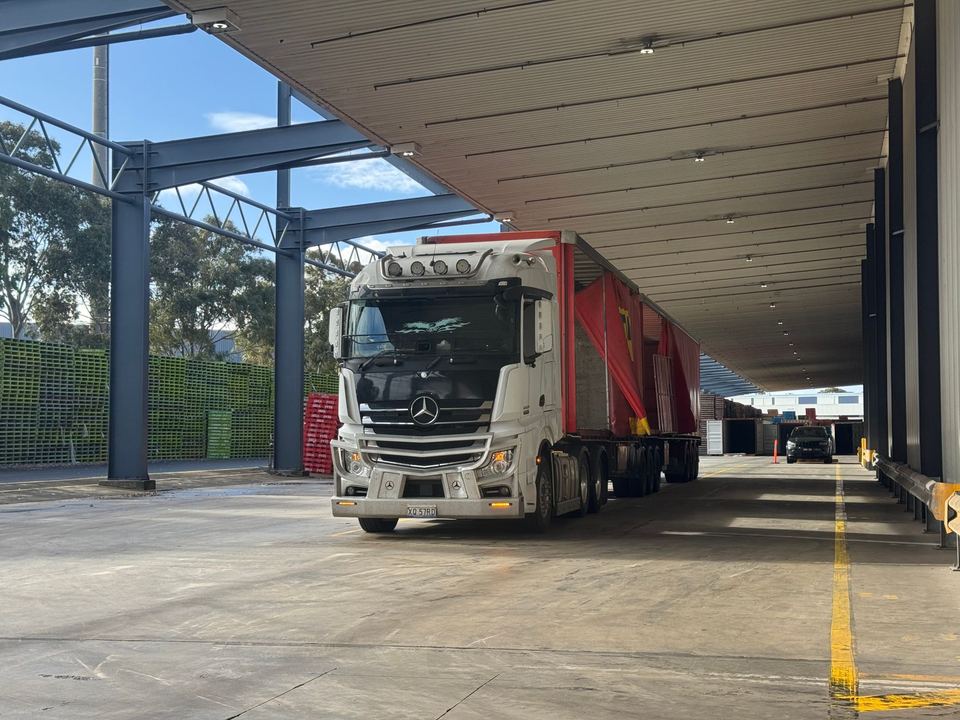
Large truck parked in a loading bay under a roof, ready for industrial transport.
WB-101 Pit-less Weighbridge (60 t) 18 m deck · 60 t · 20 kg division · ticket printer & software
Illustrative photo
Equipment list

Everything the plant needs

18 line items in process order, each with its tag, specification, quantity, power and an indicative unit price.

Equipment list (CSV)
WB-101
Shared · Receiving

Pit-less Weighbridge (60 t)

18 m deck · 60 t · 20 kg division · ticket printer & software

Weighs every inbound raw-material truck and every outbound finished-goods load.

Qty
1
Power
0.5 kW
Unit price
$18,000–30,000
FL-102
Shared · Storage

Wheel Loader (1.8 m³ Bucket)

3 t rated load · 1.8 m³ bucket · diesel · rubber cutting edge

Reclaims straights from the bulk bays and feeds the Line A weigher and Line B hoppers.

Qty
1
Power
—
Unit price
$45,000–75,000
BW-201
Line A · Blending

Multi-Hopper Batch Weighing System

4 × 8 m³ hoppers · micro-doser · 2 t batch · ± 0.2 % · PLC recipes

Weighs DAP, urea, MOP, CAN and micronutrients to each blend recipe.

Qty
1
Power
7.5 kW
Unit price
$22,000–38,000
RB-202
Line A · Blending

Rotary Drum Blender (2 t Batch)

2 t batch · 3–4 min cycle · internal flights · 6 t/h

Tumbles the weighed straights into a uniform bulk blend without breaking granules.

Qty
1
Power
11 kW
Unit price
$14,000–24,000
GR-301
Line A · Granulation

Rotary Drum Granulator

Ø 2.0 × 8 m · 5 t/h · steam & water spray · rubber lining

Rolls fine powders and recycled fines with steam into 2–4 mm compound NPK granules.

Qty
1
Power
30 kW
Unit price
$30,000–50,000
DR-302
Line A · Drying

Rotary Drum Dryer & Hot-Air Furnace

Ø 2.2 × 20 m · 1.2 MW biomass furnace · outlet < 1.5 % moisture

Dries wet granules in co-current hot air so they stay hard and free-flowing.

Qty
1
Power
37 kW
Unit price
$55,000–90,000
CL-303
Line A · Cooling

Rotary Drum Cooler

Ø 2.0 × 18 m · ambient counter-flow air · outlet < 45 °C

Cools dried granules before screening so they do not cake in the bag.

Qty
1
Power
22 kW
Unit price
$28,000–45,000
SC-304
Line A · Screening

Rotary Screen & Chain Crusher

Double-deck 2 mm / 4 mm trommel · chain mill for oversize

Splits on-size granules from fines and oversize, which is crushed and recycled.

Qty
1
Power
15 kW
Unit price
$14,000–24,000
CD-305
Line A · Coating

Coating Drum with Oil & Powder Dosing

Ø 1.6 × 6 m · anti-caking oil spray · talc/clay powder feeder

Coats granules with anti-caking agent so they flow freely after months in store.

Qty
1
Power
7.5 kW
Unit price
$10,000–18,000
DC-306
Line A · Dust control

Cyclone & Pulse-Jet Bag Filter

Twin cyclones · 240 m² polyester bags · < 30 mg/Nm³ outlet

Captures dryer, cooler and screen dust and returns it to the granulator.

Qty
1
Power
30 kW
Unit price
$22,000–38,000
WT-401
Line B · Composting

Self-Propelled Windrow Turner

3 m working width · 1.2 m pile height · 800 m³/h · diesel

Turns and aerates manure and crop-residue windrows to hold 55–65 °C composting.

Qty
1
Power
—
Unit price
$28,000–48,000
CR-402
Line B · Preparation

Semi-Wet Crusher & Paddle Mixer

Chain-blade crusher 3 t/h · twin-shaft paddle mixer · mineral feeder

Crushes mature compost and blends it with rock phosphate, lime and minerals.

Qty
1
Power
26 kW
Unit price
$10,000–18,000
PG-403
Line B · Granulation

Disc Pan Granulator

Ø 2.8 m tilting pan · 1 t/h each · water spray · 3–5 mm pellets

Rolls the compost-mineral mix into round organic pellets.

Qty
2
Power
11 kW
Unit price
$6,000–10,000
DR-404
Line B · Drying

Organic Pellet Dryer & Cooler Set

Ø 1.6 × 14 m dryer + cooler · 0.8 MW furnace · < 90 °C product

Dries pellets gently from about 30 % to 12 % moisture to keep microbes alive.

Qty
1
Power
30 kW
Unit price
$40,000–65,000
MT-501
Line C · Mixing

SS Dissolving & Mixing Tanks

1,500 L SS316 · high-shear agitator · 25 µm bag filter on transfer

Dissolve soluble salts, add chelated micronutrients and hold the batch for filling.

Qty
3
Power
3 kW
Unit price
$4,500–8,000
LF-502
Line C · Filling

Liquid Filling, Capping & Labelling Line

4-head piston filler 1–20 L · capper · labeller · 1,200 × 1 L/h

Fills, caps, labels and batch-codes 1 L and 5 L bottles and 20 L jerrycans.

Qty
1
Power
6 kW
Unit price
$22,000–40,000
QC-601
Shared · Quality

QC Laboratory (NPK & Physical)

Kjeldahl N · UV-vis (P) · flame photometer (K) · sieves · EC/pH

Tests nutrient guarantee, moisture, granule size, crush strength, EC and pH on every lot.

Qty
1
Power
8 kW
Unit price
$30,000–55,000
BG-602
Shared · Bagging

Open-Mouth Bagging Scale & Sewer

25–50 kg · 6 bags/min · ± 0.2 % · belt + sewing head · big-bag frame

Weighs, fills and sews 50 kg bags and fills 1 t big bags for bulk buyers.

Qty
2
Power
3 kW
Unit price
$9,000–16,000
Line items18
Machines22
Connected load≈ 268 kW
Equipment budgetUS$431,500 – 734,000

Indicative ex-works prices (US$, 2026) for budgeting a sample project, not quotations. Photos are illustrative of each machine class.

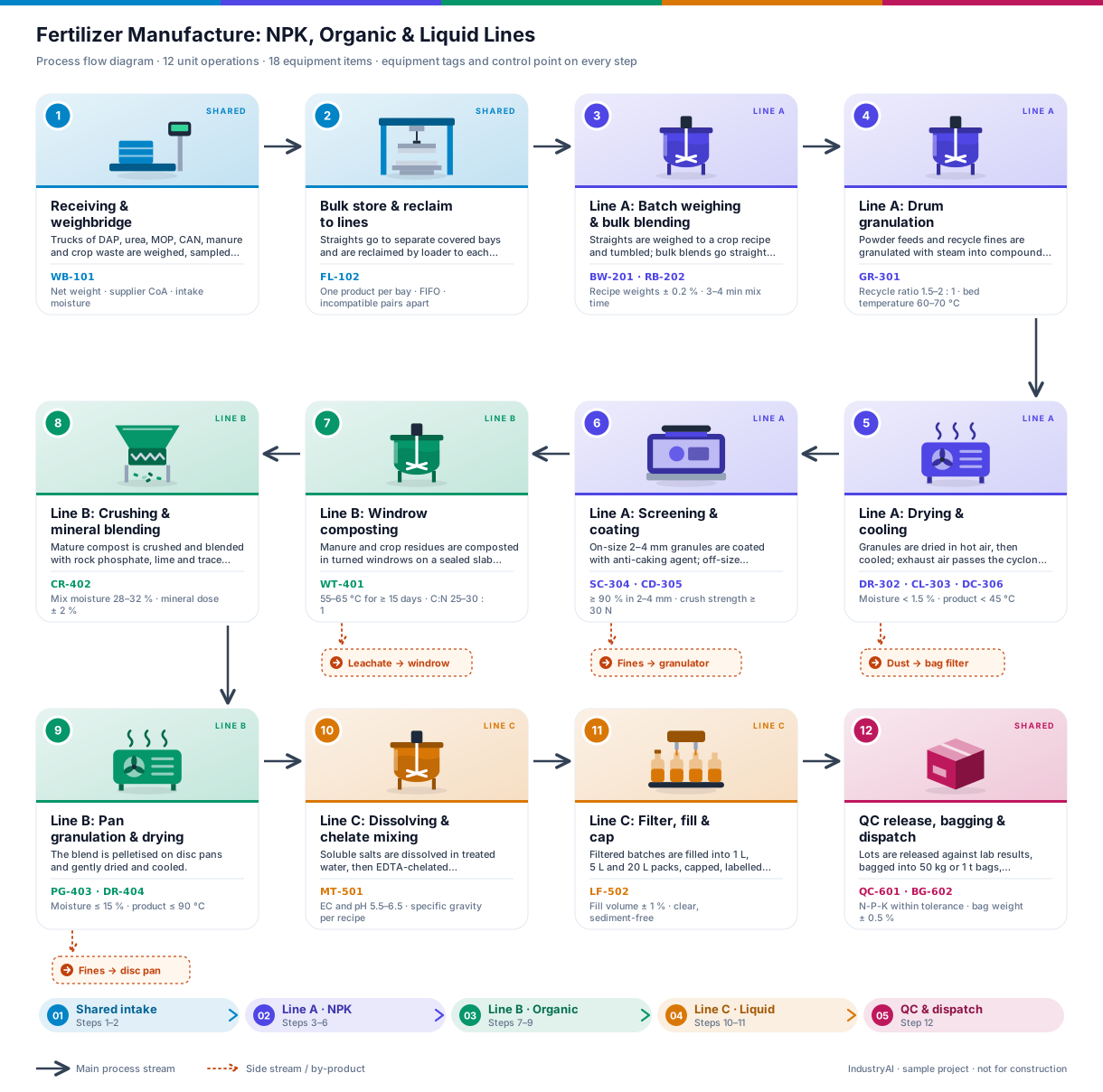
Process flow diagram

From raw material to dispatch

12 unit operations in order, with the equipment that performs each and its control point.

Download PFD (SVG)
Process flow diagram of the Fertilizer Manufacture: NPK, Organic & Liquid Lines: 1. Receiving & weighbridge, 2. Bulk store & reclaim to lines, 3. Line A: Batch weighing & bulk blending, 4. Line A: Drum granulation, 5. Line A: Drying & cooling, 6. Line A: Screening & coating, 7. Line B: Windrow composting, 8. Line B: Crushing & mineral blending, 9. Line B: Pan granulation & drying, 10. Line C: Dissolving & chelate mixing, 11. Line C: Filter, fill & cap, 12. QC release, bagging & dispatch.
StepOperationEquipmentControl point
01 Receiving & weighbridgeTrucks of DAP, urea, MOP, CAN, manure and crop waste are weighed, sampled and logged. WB-101 Pit-less Weighbridge (60 t) Net weight · supplier CoA · intake moisture
02 Bulk store & reclaim to linesStraights go to separate covered bays and are reclaimed by loader to each line's hopper. FL-102 Wheel Loader (1.8 m³ Bucket) One product per bay · FIFO · incompatible pairs apart
03 Line A: Batch weighing & bulk blendingStraights are weighed to a crop recipe and tumbled; bulk blends go straight to bagging. BW-201 Multi-Hopper Batch Weighing SystemRB-202 Rotary Drum Blender (2 t Batch) Recipe weights ± 0.2 % · 3–4 min mix time
04 Line A: Drum granulationPowder feeds and recycle fines are granulated with steam into compound NPK granules. GR-301 Rotary Drum Granulator Recycle ratio 1.5–2 : 1 · bed temperature 60–70 °C
05 Line A: Drying & coolingGranules are dried in hot air, then cooled; exhaust air passes the cyclone and bag filter.Dust → bag filter DR-302 Rotary Drum Dryer & Hot-Air FurnaceCL-303 Rotary Drum CoolerDC-306 Cyclone & Pulse-Jet Bag Filter Moisture < 1.5 % · product < 45 °C
06 Line A: Screening & coatingOn-size 2–4 mm granules are coated with anti-caking agent; off-size returns to the granulator.Fines → granulator SC-304 Rotary Screen & Chain CrusherCD-305 Coating Drum with Oil & Powder Dosing ≥ 90 % in 2–4 mm · crush strength ≥ 30 N
07 Line B: Windrow compostingManure and crop residues are composted in turned windrows on a sealed slab for 45–60 days.Leachate → windrow WT-401 Self-Propelled Windrow Turner 55–65 °C for ≥ 15 days · C:N 25–30 : 1
08 Line B: Crushing & mineral blendingMature compost is crushed and blended with rock phosphate, lime and trace minerals. CR-402 Semi-Wet Crusher & Paddle Mixer Mix moisture 28–32 % · mineral dose ± 2 %
09 Line B: Pan granulation & dryingThe blend is pelletised on disc pans and gently dried and cooled.Fines → disc pan PG-403 Disc Pan GranulatorDR-404 Organic Pellet Dryer & Cooler Set Moisture ≤ 15 % · product ≤ 90 °C
10 Line C: Dissolving & chelate mixingSoluble salts are dissolved in treated water, then EDTA-chelated micronutrients are added. MT-501 SS Dissolving & Mixing Tanks EC and pH 5.5–6.5 · specific gravity per recipe
11 Line C: Filter, fill & capFiltered batches are filled into 1 L, 5 L and 20 L packs, capped, labelled and coded. LF-502 Liquid Filling, Capping & Labelling Line Fill volume ± 1 % · clear, sediment-free
12 QC release, bagging & dispatchLots are released against lab results, bagged into 50 kg or 1 t bags, palletised and dispatched. QC-601 QC Laboratory (NPK & Physical)BG-602 Open-Mouth Bagging Scale & Sewer N-P-K within tolerance · bag weight ± 0.5 %
Schematic

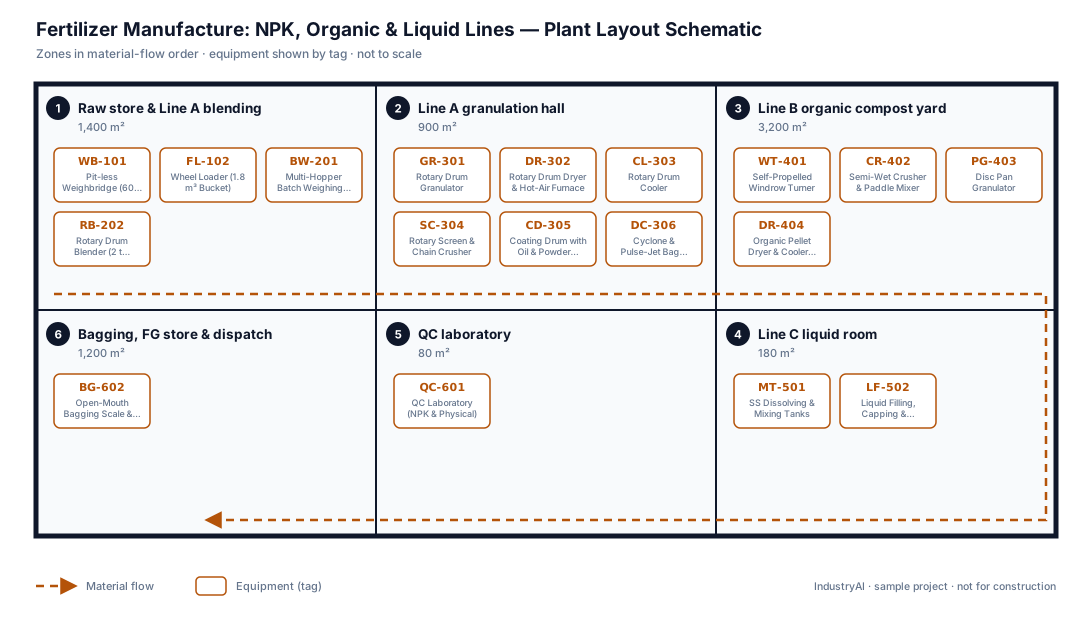
Plant layout

6 zones arranged for one-way material flow, with every item of equipment placed by tag.

Download layout (SVG)
Plant layout schematic of the Fertilizer Manufacture: NPK, Organic & Liquid Lines: Raw store & Line A blending, Line A granulation hall, Line B organic compost yard, Line C liquid room, QC laboratory, Bagging, FG store & dispatch.
Features & capacities

Why this line works

One intake, three lines

A shared weighbridge, store and loader feed NPK, organic and liquid lines from one site.

Blend or granulate

Line A switches between fast bulk blends and fully granulated compound NPK.

Soil-test-led recipes

PLC-stored recipes turn county soil-test results into crop-specific blends in minutes.

Closed-loop recycling

Fines, oversize and captured dust go back to the granulator; compost leachate goes back to the windrows.

High-margin liquids

Line C adds foliar and fertigation products that earn more per kilogram of nutrient.

Guarantee on every bag

An in-house lab checks N-P-K, moisture and granule size before any lot is released.

Capacities

Line A bulk blending
5–6 t/h · 2 t batches
Line A granulation
5 t/h · 2–4 mm granules
Line B organic pellets
2 t/h · ≈ 5,000 t/yr
Line B compost yard
≈ 1,800 t in windrows (45–60 day cycle)
Line C liquids
3,000 L/day · 3 × 1,500 L batches
Bagging
2 × 6 bags/min (50 kg) · big bags to 1 t
17:17:17 blend cost
≈ KES 73,300/t raw materials

Utilities required

Electricity
≈ 270 kW listed + ≈ 40 kW conveyors & elevators · 400 kVA transformer · 415 V 3-phase
Heat
1.2 MW (Line A) + 0.8 MW (Line B) biomass furnaces · ≈ 4–5 t briquettes/day at full rate
Steam
500 kg/h low-pressure steam for granulation
Water
≈ 20 m³/day incl. softened/RO water for Line C
Diesel
≈ 120 L/day for loader and windrow turner
Emissions & effluent
Bag-filter stack < 30 mg/Nm³ · lined leachate pond · NEMA licences
Process instructions

Standard operating procedures

The core routines operators follow, from start-up to batch release.

01Storing urea, CAN & straights

  1. Keep each straight in its own labelled bay; never store CAN or other ammonium-nitrate grades next to urea, diesel, organics or sawdust.
  2. Keep ammonium-nitrate materials away from heat, furnaces and welding; allow no hot work in the store without a permit.
  3. Stack bags no more than 10 high, keep 1 m clear of walls, and keep the store dry because urea and CAN cake when damp.
  4. Check the compatibility chart before blending: urea with CAN or with superphosphates turns sticky and must not be blended.

02Line A start-up & run

  1. Start the bag filter and dryer furnace first, then cooler, screens, granulator and feeders in reverse order of flow.
  2. Load the recipe on the weigher PLC and confirm raw-material bay numbers against the batch card.
  3. Log granulator bed temperature, dryer outlet temperature and recycle ratio every hour.
  4. Take a composite sample every 2 hours for N-P-K, moisture and granule size.

03Lines B & C

  1. Turn windrows at least twice a week and record core temperatures; hold 55–65 °C for 15 days to kill pathogens and weed seeds.
  2. Pump leachate from the lined pond back onto the windrows; never discharge it to drains.
  3. In Line C, dissolve salts into water under agitation, then add chelates; check EC, pH and clarity before filling.
  4. Rinse Line C tanks and filler between products to avoid cross-contamination of formulations.

04Dust, PPE & housekeeping

  1. Wear dust masks (FFP2), goggles, gloves and safety boots in the store, granulation hall and bagging area.
  2. Wear a chemical apron and face shield when handling concentrated acids or chelates in Line C.
  3. Empty bag-filter hoppers each shift and sweep spills back to the recycle stream, not the drain.
  4. Lock out and tag out before opening any drum, crusher, mixer or conveyor.
Process documents

The full project document

8 sections: open any one to read it, or download the whole document.

01Executive Summary

Mavuno Blend Fertilizers Ltd is a fertilizer plant in Nakuru's industrial area, on the A104 highway between Mombasa's import terminals and the maize and wheat farms of the North Rift. Imported straights and local organic waste arrive through one shared intake (weighbridge, covered bulk bays and a wheel loader), which then branches into three production lines: Line A bulk-blends and granulates crop-specific NPK at 5 t/h, Line B composts manure and crop residues into 2 t/h of organic pellets, and Line C makes 3,000 L/day of liquid and foliar fertilizers. All three lines share one QC laboratory, one bagging area and one dispatch bay.

MetricValue
Line A: Blended & Granulated NPK5 t/h · ≈ 22,000 t/yr capacity (2 shifts)
Line B: Organic / Bio-fertilizer2 t/h · ≈ 5,000 t/yr capacity
Line C: Liquid & Foliar3,000 L/day · ≈ 840,000 L/yr capacity
Annual Revenue (Year 1)KES 912,000,000 (~$7.0M)
Initial Investment (capex)KES 130,000,000 (~$1.0M) + KES 220M working-capital facility
Operating Break-evenMonth 9
Payback Period≈ 3 years on capex and working capital
Employees72 (plus 8 field agronomists)
02Product Lines & Categories

The plant is built around three product categories that share raw-material intake, QC and dispatch but run on their own equipment, so each line can be scheduled around its own season and customers.

LineProductsTarget CropsPack SizesEx-factory Price
Line A: Blended & Granulated NPK17:17:17, 23:23:0, 10:26:10 + Zn/B, maize/wheat planting and top-dress blends, custom soil-test blendsMaize, wheat, potatoes, tea, horticulture50 kg bags · 1 t big bagsKES 4,700/50 kg (~$36) · KES 94,000/t
Line B: Organic / Bio-fertilizerCompost pellets, phosphate-enriched organic, lime-fortified soil conditionerHorticulture, coffee, avocado, acidic maize soils25 kg · 50 kg bagsKES 2,000/50 kg (~$15) · KES 40,000/t
Line C: Liquid & FoliarNPK foliar feeds, chelated micronutrient mixes, calcium-boron, fertigation concentratesVegetables, flowers, fruit, greenhouses1 L · 5 L bottles · 20 L jerrycansAverage KES 380/L (~$2.90)

Why Three Lines

  • Seasonal balance: Line A peaks before the long and short rains; Lines B and C sell to irrigated horticulture all year.
  • Customer reach: the same agro-dealer network carries a planting blend, an organic conditioner and a foliar feed.
  • Soil health: organic and lime-fortified products help correct the acidity left by years of DAP use in the Rift Valley and western Kenya.
03Production Process

Shared Intake

  • Step 1 - Receiving: Every truck crosses the 60 t weighbridge; straights are sampled against the supplier's certificate and organic feedstock is checked for moisture and contaminants.
  • Step 2 - Bulk storage & reclaim: Straights go into separate covered bays, and the wheel loader reclaims them to the Line A weigher or the Line B yard.

Line A: Blended & Granulated NPK (5 t/h)

  • Step 3 - Batch weighing & bulk blending: The multi-hopper weigher doses DAP, urea, MOP, CAN and micronutrients to a PLC recipe, and a rotary drum blends each 2 t batch in 3–4 minutes. Bulk blends go straight to bagging.
  • Step 4 - Drum granulation: For compound NPK, powdered feeds and recycled fines are granulated with steam and water in a rotary drum.
  • Step 5 - Drying & cooling: Granules are dried to below 1.5% moisture and cooled to below 45 °C. A cyclone and bag filter capture the dust and return it to the granulator.
  • Step 6 - Screening & coating: A trommel separates 2–4 mm product. Oversize is crushed and, with the fines, recycled to the granulator. The product is then coated with anti-caking oil and powder.

Line B: Organic / Bio-fertilizer (2 t/h)

  • Step 7 - Windrow composting: Manure, coffee pulp and crop residues are composted for 45–60 days on a sealed slab and turned twice a week. Leachate is pumped back onto the windrows.
  • Step 8 - Crushing & mineral blending: Mature compost is crushed and mixed with rock phosphate, agricultural lime and trace minerals.
  • Step 9 - Pan granulation & drying: Disc pans form 3–5 mm pellets, which are dried at low temperature to about 12% moisture.

Line C: Liquid & Foliar (3,000 L/day)

  • Step 10 - Dissolving & chelate mixing: Soluble salts (urea, MKP, potassium nitrate) are dissolved in treated water, then EDTA-chelated Zn, Fe, Mn and Cu are added.
  • Step 11 - Filtration & filling: Batches pass a 25 µm filter and are filled into 1 L, 5 L and 20 L packs, then capped, labelled and coded.

Shared Release & Dispatch

  • Step 12 - QC, bagging & dispatch: Each lot is released against lab results, then bagged, palletised and loaded out over the weighbridge.
04Raw Materials & Formulations

17:17:17 Bulk Blend (per tonne)

IngredientAnalysisQuantityCost/kg (KES)Total (KES)
DAP18-46-0370 kg10538,850
Urea46-0-0225 kg6514,625
MOP (muriate of potash)0-0-60283 kg5515,565
Zinc sulphateZn 33%12 kg1802,160
BorateB 15%3 kg3501,050
Dolomitic lime (filler)Ca/Mg107 kg101,070
Total17-17-17 + Zn, B1,000 kg73,320

Nutrient check: N = 66.6 kg (DAP) + 103.5 kg (urea) = 170 kg; P₂O₅ = 170 kg from DAP; K₂O = 170 kg from MOP. Urea–DAP blends pick up moisture quickly, so they are bagged within 24 hours and sold within one season.

Other Inputs

InputLineAnnual Quantity (Year 3)Source
DAP, MAP, urea, MOP, CAN, SOPA, C≈ 13,000 tImported via Mombasa; railed to Naivasha ICD or trucked
Zinc, boron, sulphur, magnesium sourcesA, C≈ 250 tImporters and regional traders
Cattle and poultry manure, crop residuesB≈ 11,000 t (wet)Dairy farms, poultry units, flower farms around Nakuru
Rock phosphate and agricultural limeB≈ 900 tRegional quarries and importers
EDTA chelates, MKP, potassium nitrateC≈ 120 tSpecialty chemical importers
Woven PP bags, big bags, bottles, jerrycansAll≈ 420,000 bags · 400,000 packsNairobi and Thika packaging converters
05Quality Standards & Compliance

Every bag carries a nutrient guarantee, so the lab tests each lot before release and keeps retained samples for inspectors. The label shows the N-P₂O₅-K₂O guarantee (for example 17-17-17), declared secondary nutrients and micronutrients, net weight, batch number, date of manufacture, the manufacturer's address and the registration number.

RequirementAuthorityScope
Registration of premises and each fertilizer productFertilizer and Animal Foodstuffs Board (FAFB), Fertilizers and Animal Foodstuffs Act (Cap 345)Before sale; renewed annually
Product standards and Standardisation MarkKEBS (Kenya and EAC fertilizer specifications)NPK, organic and foliar products; periodic surveillance sampling
Inspection, sampling and phytosanitary checksKEPHISMarket and import sampling; organic feedstock and export consignments
EIA licence, air emission and effluent licencesNEMADryer stacks, compost leachate, waste handling
Net-quantity verification of scales and packsWeights & Measures DepartmentWeighbridge, bagging scales, liquid fill volumes
Workplace safety, fire and chemical storageDOSHS and county fire departmentAnnual audit, fire certificate, CAN storage
Organic claims (optional)Certification body under the East African Organic Products StandardLine B "organic" labelling

Release Tolerances

  • Line A: each declared nutrient within the permitted tolerance of its guarantee; moisture below 1.5%; at least 90% of granules at 2–4 mm; crush strength of 30 N or more
  • Line B: moisture 15% or less, organic carbon and N-P-K as declared, heavy metals within limits, pathogen-free after the thermophilic phase
  • Line C: declared nutrients (w/v), pH 5.5–6.5, EC as specified, no sediment after a 7-day stability test
06Financial Projections

Revenue by Line (KES)

LineYear 1Year 2Year 3
Line A: NPK (7,500 · 11,000 · 13,500 t at KES 94,000/t)705,000,0001,034,000,0001,269,000,000
Line B: Organic (2,800 · 4,000 · 5,000 t at KES 40,000/t)112,000,000160,000,000200,000,000
Line C: Liquid (250,000 · 400,000 · 550,000 L at KES 380/L)95,000,000152,000,000209,000,000
Total Revenue912,000,000 (~$7.0M)1,346,000,000 (~$10.4M)1,678,000,000 (~$12.9M)

Profit & Loss (KES)

MetricYear 1Year 2Year 3
Raw materials & packaging (A 82%, B 35%, C 45%)660,000,000972,000,0001,205,000,000
Gross Margin252,000,000374,000,000473,000,000
Labour52,000,00060,000,00068,000,000
Energy, biomass & diesel38,000,00052,000,00062,000,000
Distribution, agronomy & soil testing45,000,00062,000,00076,000,000
Admin, licences & insurance30,000,00036,000,00042,000,000
Depreciation & interest25,000,00024,000,00022,000,000
Profit Before Tax62,000,000 (~$0.48M)140,000,000 (~$1.08M)203,000,000 (~$1.56M)
Margin6.8%10.4%12.1%

Capital Budget

Equipment (all three lines plus shared intake, lab and bagging): about KES 76M (~$585,000). Conveyors, bucket elevators and installation: KES 16M. Civil adaptation of a leased warehouse, compost slab and leachate pond: KES 22M. Permits, product registration, lab set-up and pre-operating costs: KES 16M. Total capex: KES 130M (~$1.0M). Seasonal raw-material stock is financed through a KES 220M trade-finance facility, drawn before each planting season.

Line A earns a thin margin on a large volume, while Lines B and C earn 55–65% gross margins on smaller volumes. That is why the plan pushes custom blends and liquids once the NPK line has built the dealer network.

07Market Analysis & Opportunity

Kenya uses about 700,000 tonnes of fertilizer a year, and almost all of it is imported as finished products or straights. Since 2022 the National Fertilizer Subsidy Programme has sold 50 kg bags to registered farmers at about KES 2,500 through NCPB depots and e-vouchers, and it increasingly includes locally blended NPK and organic fertilizers. That creates a large institutional buyer alongside commercial agro-dealers.

SegmentDemand DriverMavuno Offer
Subsidy programme (NCPB / county)Tenders for planting and top-dress fertilizerLine A blends in 50 kg bags, delivered to depots
Commercial agro-dealersFarmers buying outside the subsidy windowBranded NPK, organic pellets and foliar feeds
Large farms & cooperativesWheat, maize, tea and sugarcane estatesSoil-test-led custom blends in 1 t big bags
Horticulture & greenhousesExport flowers, vegetables, avocadoLiquid fertigation feeds, chelates, organic conditioners

Growth Drivers

  • Soil-testing-led blending: county soil-testing drives and KALRO recommendations favour crop- and region-specific NPK over blanket DAP and CAN. A blender can produce these in 2 t batches, which importers cannot do economically.
  • Soil acidity and organic demand: many maize soils in the Rift Valley and western Kenya fall below pH 5.5. Lime-fortified organic pellets meet a clear agronomic need, and export growers want organic inputs for their certification.
  • Import substitution: blending locally from bulk straights cuts bagging, freight and handling costs compared with importing finished compound NPK.
  • Competition: established blenders in Eldoret and Nakuru compete on NPK volume. Mavuno competes on custom blends, organic products and liquids, which the large players do not focus on.
08Implementation Timeline & Risks

Implementation Timeline

MonthMilestoneOwnerDependency
M1Lease 1.2 ha site with warehouse, submit EIA study reportMD3-phase power and road access for trailers
M2Order equipment (30% deposit), apply for transformer upgradeMDCapex financing closed
M2–M5Civil works: bulk bays, compost slab, leachate pond, liquid room, labPlant ManagerNEMA EIA licence
M4Line B windrows started with first manure contractsOperations LeadCompost slab complete
M5–M6Equipment arrives; installation with supplier engineersPlant ManagerTransformer energised
M6Commissioning; FAFB premises and product registration; KEBS samplingQA ManagerTrial lots and lab results
M7Commercial launch of Line A and Line B, aimed at short-rains plantingSales LeadTrade-finance line for straights
M9Line C liquids launched to horticulture customersSales LeadProduct registration
M12Subsidy programme tender qualification; two-shift operation on Line AMDA full season of quality records

Key Risks & Mitigation

RiskImpactMitigation
Swings in world urea, DAP and potash pricesHighBuy against confirmed orders, keep limited stock, quote price bands to dealers
Currency depreciation on imported straightsHighUSD-matched trade finance and forward cover for large shipments
Changes to subsidy policy or late government paymentsHighKeep subsidy sales below 40% of volume and grow commercial and estate sales
Off-spec or counterfeit claims damaging the brandHighLot release, retained samples, tamper-evident sewn bags, QR batch codes
Caking and moisture pick-up in storeMediumCoating, dry covered bays, compatibility rules, FIFO dispatch
Dust, odour and leachate complaintsMediumBag filters, covered windrows, lined leachate pond, buffer planting
Fire or explosion risk in ammonium-nitrate storageHighSegregated CAN bay, no hot work, fire-fighting equipment and DOSHS training

Get the complete package

Equipment specifications, process flow diagrams, recipes and the business plan, bundled as one download.